Epoxy Flooring Services in Miami
A coastal subtropical climate and a slab sitting close to the water table change what a Miami floor has to survive. Browse the full range of epoxy systems we install across Miami-Dade — each one chosen and prepped for the conditions on your block.
Google Rating 100%
5-Star Reviews Miami-Dade
County-Wide Service Mon–Fri
Service Hours
Epoxy flooring built for what Miami throws at concrete
Most of Miami-Dade is built on oolitic limestone with the water table sitting just a few feet below the slab. That means moisture is constantly trying to push up through your concrete from underneath — a problem a roller-and-go installer in a drier city never has to think about. Add year-round subtropical humidity, salt-laden air off Biscayne Bay, and a hurricane season that can put standing water on a floor for days, and you have the four conditions that peel, bubble, and delaminate a poorly installed epoxy coating.
Every service below starts the same way: a calcium-chloride or relative-humidity moisture reading on your actual slab, then a vapor-tolerant primer matched to what we find. That is the difference between a floor that lasts and a callback the next rainy season. Pick the system that fits your space — from a single-car garage in Kendall to a restaurant kitchen in Brickell or a Medley distribution warehouse.
Choose Your Epoxy Flooring Service in Miami
Six systems, one standard of slab prep. Each links through to a full page on materials, process, and what to expect for that space.
Residential Epoxy Flooring
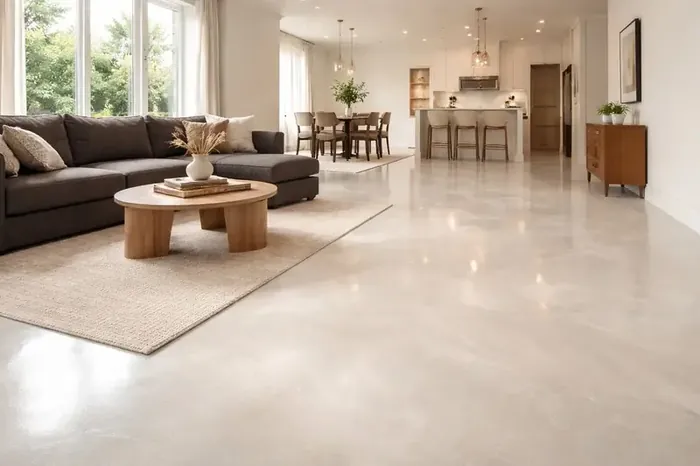
Coastal homes from Coral Gables to the Beaches deal with salt air and sticky humidity that warp and stain ordinary floors. We finish garages, Florida rooms, laundry areas, patios, and lanais in seamless epoxy that wipes clean of salt residue and won't trap the mildew a tropical climate loves — with metallic and flake looks that suit a waterfront condo or a Pinecrest single-family.
- Vapor-tolerant primer for slabs sitting near the Miami-Dade water table
- Seamless, non-porous finish that rinses salt and resists tropical mildew
- Metallic, flake, and solid finishes for homes, condos, and lanais
Commercial Epoxy Flooring
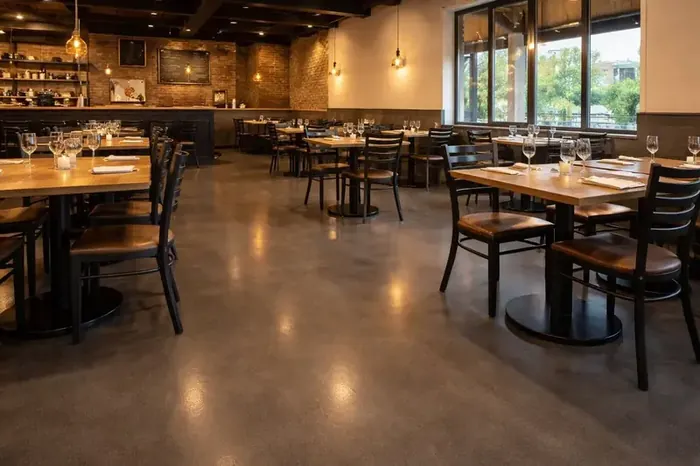
Miami runs on hospitality — restaurants, bars, hotels, cafes, and the kitchens behind them. Those floors face spills, grease, constant wash-downs, and health-inspector scrutiny every single day. We install seamless, sanitary commercial epoxy for South Beach and Brickell food-and-beverage spaces, plus retail, salons, and medical offices that need a finish that still looks sharp after a season of foot traffic.
- Seamless, sanitary finishes suited to commercial kitchens and wash-down areas
- Slip-resistant texture for wet, high-traffic hospitality floors
- Overnight and weekend installs that keep a venue open for service
Industrial Epoxy Flooring
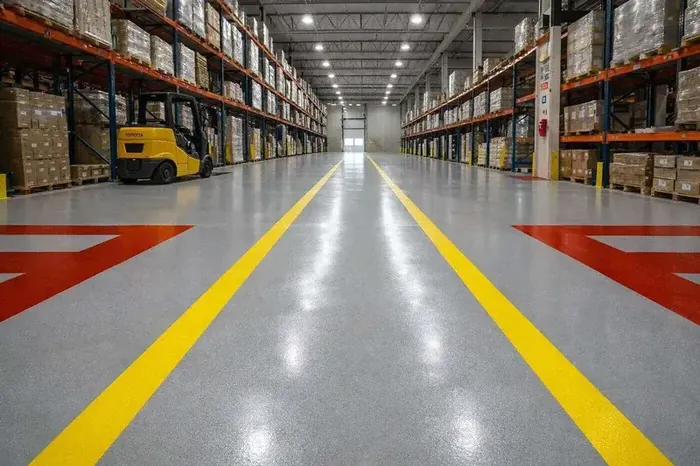
The Doral, Hialeah, and Medley warehouse belt and the trade flowing through PortMiami and the airport keep distribution floors under constant forklift and pallet-jack load. Slabs this close to the water table also need a coating that won't let ground moisture undermine the bond. Our industrial systems are vapor-tolerant, chemical-resistant, and rated for the heavy daily abuse a Miami logistics floor takes.
- Forklift-rated buildup that holds up to high-volume distribution traffic
- Vapor-tolerant base that resists moisture pushing up from the slab
- Safety striping, zone markings, and phased installs around shifts
Garage Epoxy Flooring
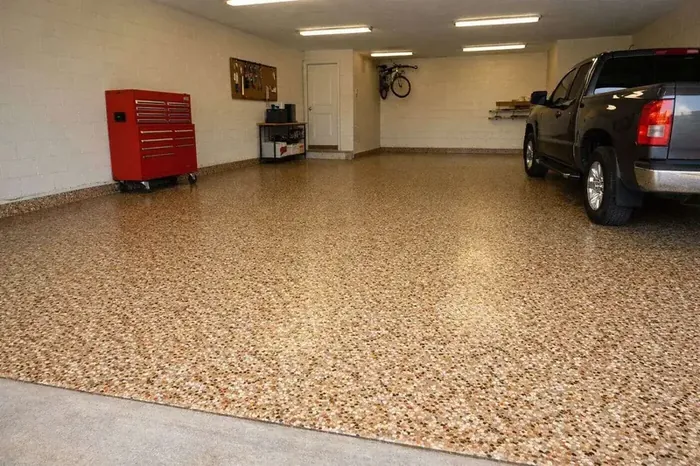
Our most-requested system in Miami. A garage here bakes in summer heat, swings through daily humidity, and — in low-lying neighborhoods — can take on water during a hurricane-season downpour or storm surge. A properly bonded flake or metallic coating shrugs off hot-tire pickup, dries out fast after flooding instead of trapping moisture, and turns an oil-stained slab into a clean, sealed surface.
- Hot-tire-resistant bond that holds through a Miami summer
- Sealed, non-absorbent surface that dries quickly after storm flooding
- Flake, metallic, and quartz options, most 2-car garages in 1–2 days
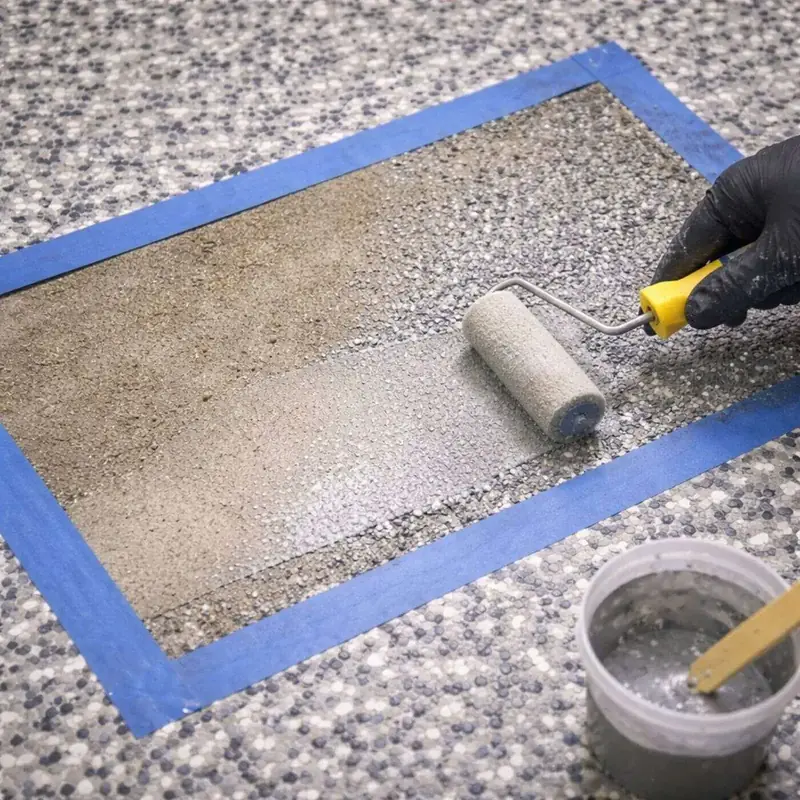
Epoxy Repair & Maintenance
Most failed floors we see in Miami weren't beaten by traffic — they were beaten by moisture. A coating laid over a damp slab without a vapor reading bubbles, hazes, or peels once humidity and storm water go to work on it. We diagnose the real cause, fix what's salvageable, and reset the prep so the repair actually lasts instead of failing again next wet season.
- Moisture diagnosis to find why the first coating gave out
- Spot patches, full recoats, and post-flood restoration
- Upkeep plans that keep a coastal floor sealed year-round
What Makes a Floor Last in Miami-Dade
A coating is only as good as the slab prep beneath it. Here is how we approach every Miami install — and why our floors hold up where coastal moisture defeats lesser work.
Moisture-First Slab Prep
We read the slab before we coat it. Diamond grinding plus a calcium-chloride or RH moisture test tells us whether your concrete — often sitting over oolitic limestone near the water table — needs a vapor-tolerant primer. That single step is what stops the bubbling and peeling Miami floors are known for.
Free On-Site Estimates
No vague guesses over the phone. Every Miami floor is priced after a free on-site visit, and the quote you get reflects what your specific slab actually needs.
Miami Project Gallery
Our gallery shows floors like the ones we install across Miami-Dade — Coral Gables garages, Brickell storefronts, Doral warehouses — so you can see the finish before you commit.
A Local Miami-Dade Crew
Our crew works right here in Miami-Dade — the same people who quote your floor are the ones who grind, prime, and coat it. Call the direct line and reach someone who already knows the conditions on the ground here.
A Warranty You Can Read
Written, specific, and published before you put down a deposit. It spells out what's covered, what isn't, and how to file a claim — the kind of straight answer that matters when coastal moisture is the variable.