Residential Epoxy Flooring in Miami — Sealed Against the Salt, the Storms, and the Slab
From a 1950s CBS bungalow in Shenandoah to a bayfront home off Brickell or a condo unit in Edgewater, Miami floors fight the same three enemies: salt-laden air drifting in off Biscayne Bay, a water table that sits only a few feet under the slab, and a wet season that dumps rain from June through November. We install seamless epoxy that is poured only after the slab proves it is dry — not before.
Why a Miami Slab Behaves Differently Than Anywhere Else
Miami-Dade is built on porous oolitic limestone with the water table sitting just a few feet beneath your floor. That single fact reshapes everything about a coating. In a drier climate a contractor can grind, roll, and walk away. Here, the slab is a wick — ground moisture migrates upward as vapor 365 days a year, and during the May-to-October wet season that pressure climbs further still. Skip the testing and the coating lifts, blisters, or peels at the edges within a season or two. That is the failure we are hired to prevent, and it is why moisture vapor — not foot traffic — is the number-one reason epoxy fails in South Florida.
Add the salt. Homes from Coconut Grove and Brickell out to Key Biscayne and the barrier islands sit close enough to the bay that chloride-heavy air settles on every surface. A standard garage-store epoxy ambers and chalks under that combination of relentless UV and salt; we finish coastal and sun-exposed floors with a UV-stable polyaspartic topcoat so the color holds instead of yellowing. Then there is the housing itself — Miami's stock runs from 1950s CBS (concrete-block-and-stucco) bungalows in Shenandoah and Little Havana with original on-grade slabs, to mid-century ranch homes in Kendall and Pinecrest, to high-rise condos in Edgewater and Downtown where the "slab" is an elevated post-tension deck that needs a low-odor, fast-return system so neighbors aren't disrupted.
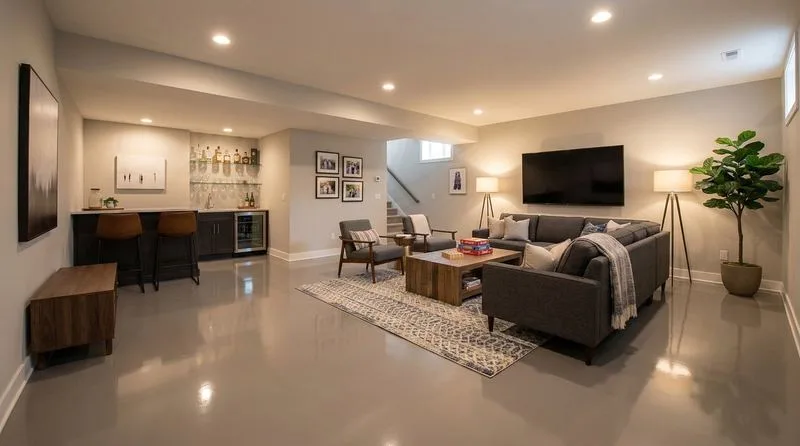
Every one of those situations gets the same non-negotiable first step: an ASTM moisture reading (in-situ RH probes or calcium-chloride) before a drop of primer goes down, plus a vapor-barrier primer whenever the numbers run hot. After that, the finish is yours — metallic in an open-plan living area, decorative flake in a Florida room or lanai, a slip-resistant blend around a screened pool deck, or a clean solid color in the laundry and entry. The attached garage typically takes the hardest beating, so it gets its own write-up on our garage epoxy flooring page; for what projects actually run by room and finish, see the Miami epoxy cost guide.
Get a Free Quote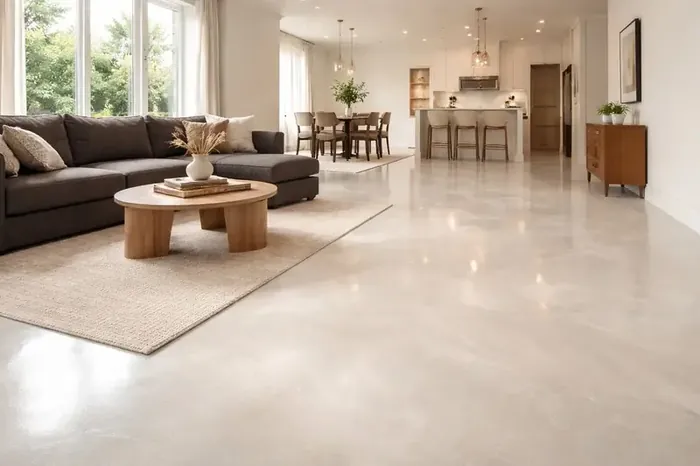
What Epoxy Solves in a Subtropical Home
Six problems Miami homeowners actually live with — and how a properly bonded floor answers each one.
Zero grout
No Lines for Mold to Live In
Tile is the default Miami floor, and tile means grout — thousands of porous channels that hold humidity and bloom black mildew in a single rainy season. Epoxy cures into one continuous, non-porous sheet with nothing to trap moisture, so the surface that looked clean last June still looks clean this June.
Holds color
A Finish That Survives the Sun
South Florida light is brutal on coatings, and salt only speeds the chalking. Cheap epoxy turns yellow; ours is sealed with a UV-stable polyaspartic topcoat. Pick an ocean-toned metallic for an open Grove living room, a terrazzo-inspired flake for a Coral Gables interior, or a calm solid for a condo — and trust it still reads true in a few years.
Sure-foot
Traction Where Water Lands
Pool decks, screened lanais, and entryways take the brunt of afternoon downpours and dripping swimsuits. We broadcast a slip-resistant aggregate into the topcoat in those zones, so wet feet, dog paws, and kids running in from the pool all keep their grip — while the floor still wipes clean in seconds.
Beach-proof
Shrugs Off Sand & Salt
Living a few minutes from the sand means tracked-in grit and salt residue every single day — the stuff that scratches tile glaze and grinds into wood. A non-porous epoxy floor just laughs at it: damp-mop the sand away, no waxing, no resealing, no special products, no grout to scrub.
Listing-ready
Reads as an Upgrade to Buyers
In a market where buyers walk dozens of homes, a flawless seamless floor signals a slab that has been looked after — the opposite of the cracked, moisture-stained concrete or dated tile they see everywhere else. It photographs beautifully for the listing and answers the inspection-report question before it is asked.
See full pricing guide →20+ yrs
Built for the Wet Season & the Storms
Laminate swells, carpet holds mildew, and tile grout fails first wherever water sits. A vapor-managed epoxy floor laid on a tested slab runs 20-plus years through every wet season — and because it is one sealed, non-porous surface, it is far easier to dry out and disinfect than tile or bare concrete if storm water ever gets inside.
How humidity affects durability →The Miami Install: Prove the Slab Is Dry, Then Pour
Anyone can roll resin onto concrete. The difference here is the order of operations — the slab earns the coating by passing a moisture reading first. Here is exactly how our crew works through a South Florida home.
1 — Walk-Through & Slab Read
~45 minWe come to your home — Grove, Gables, Kendall, the Beaches, wherever you are — and read the actual slab: its age, how close you sit to the bay, and where water tends to find its way in. You leave with finish samples in hand and a written quote with no hidden fees. Schedule yours free.
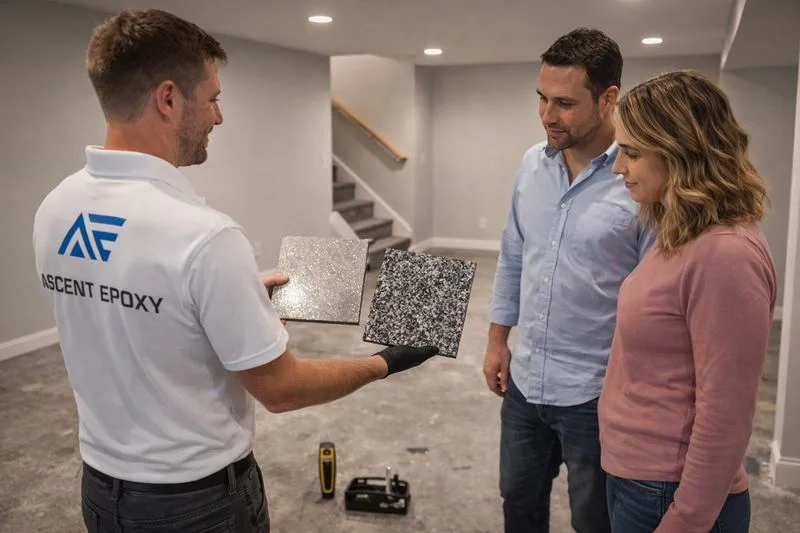
2 — Grind, Then Moisture Test
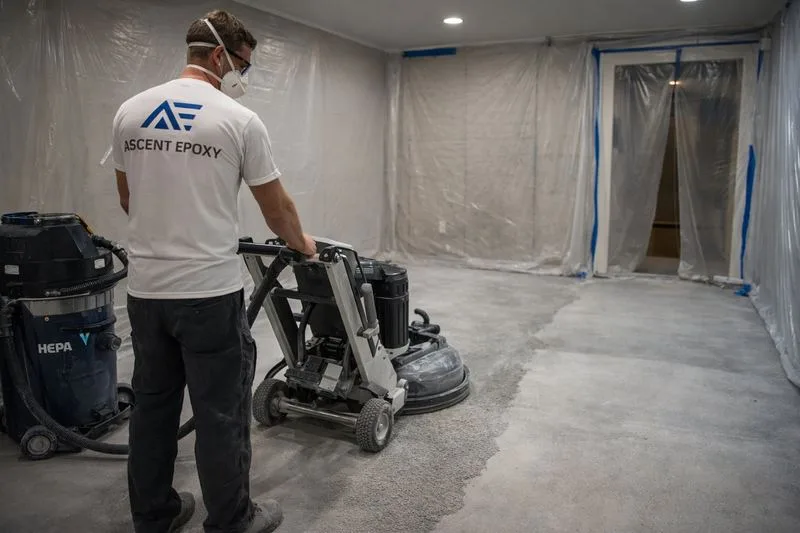
2–4 hrsDiamond grinding strips old coatings, glue, and contaminants and opens the concrete to a precise profile so the resin can mechanically bond. Then comes the step a Miami slab actually demands: an in-situ RH or calcium-chloride moisture reading. If the number is too high, we mitigate — we do not coat over it and hope.
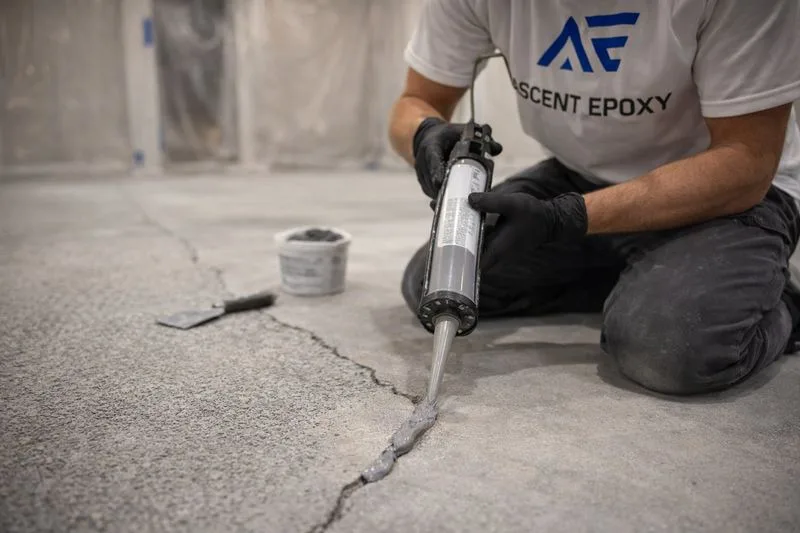
3 — Repair Cracks & Block the Vapor
30–60 minCracks, spalls, and divots — common in older Little Havana and Shenandoah slabs — are filled with structural-grade epoxy filler. When the moisture reading came back hot, this is also where we lay down a vapor-barrier primer to hold back the ground moisture pushing up from below. On flood-affected slabs we address the subsurface damage first.
4 — Coat & Seal Against Salt and Sun
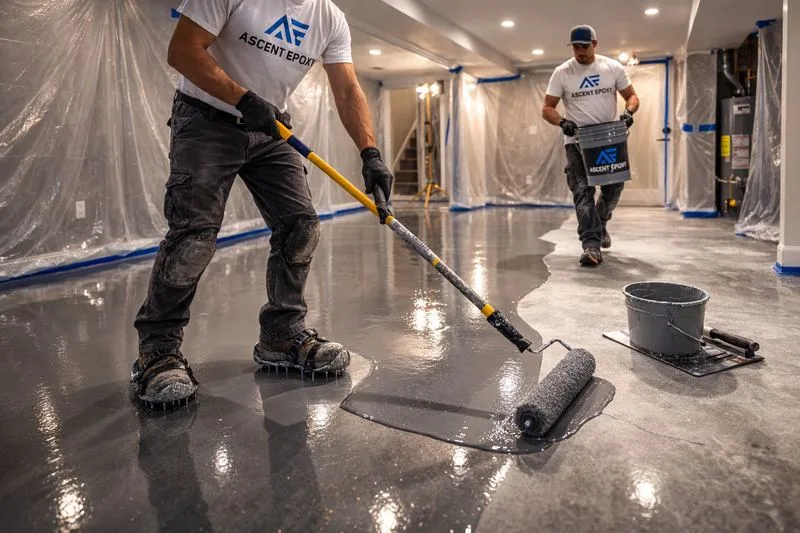
3–5 hrsWe build the floor in layers — primer, your decorative body coat, then a UV-stable polyaspartic topcoat that resists the ambering Miami sun and salt air cause. We mind the dew point and ambient humidity as we go, because a coating flashed off in muggy air cures cloudy. The slip-aggregate broadcast happens here too, in the lanai and pool-deck zones.
5 — Cure, Hand Off & Warranty
24–72 hrsThe floor cures for 24-72 hours — high humidity stretches that window, which is why we tell you a real return date instead of a hopeful one. You get simple care instructions and a written 25-year warranty against delamination, peeling, cracking, and adhesion failure — spelled out before any deposit, so you know exactly what is covered.
Ready to Start? Step 1 Is Free.
Schedule your no-obligation consultation and see finish samples in your space.
Finished Floors From Miami Homes
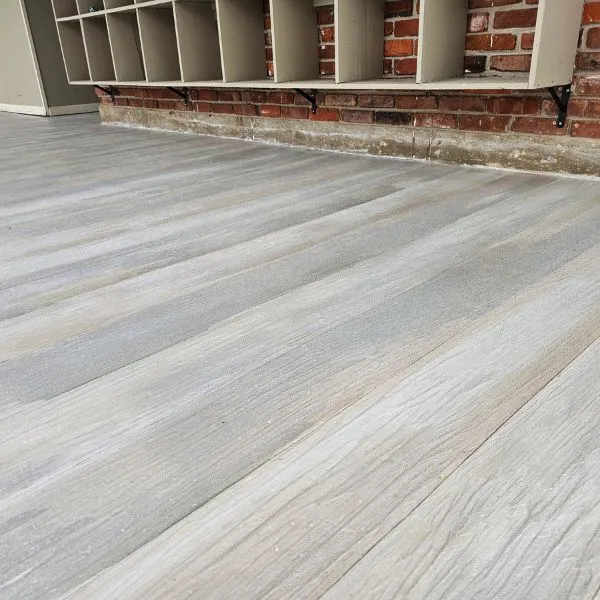
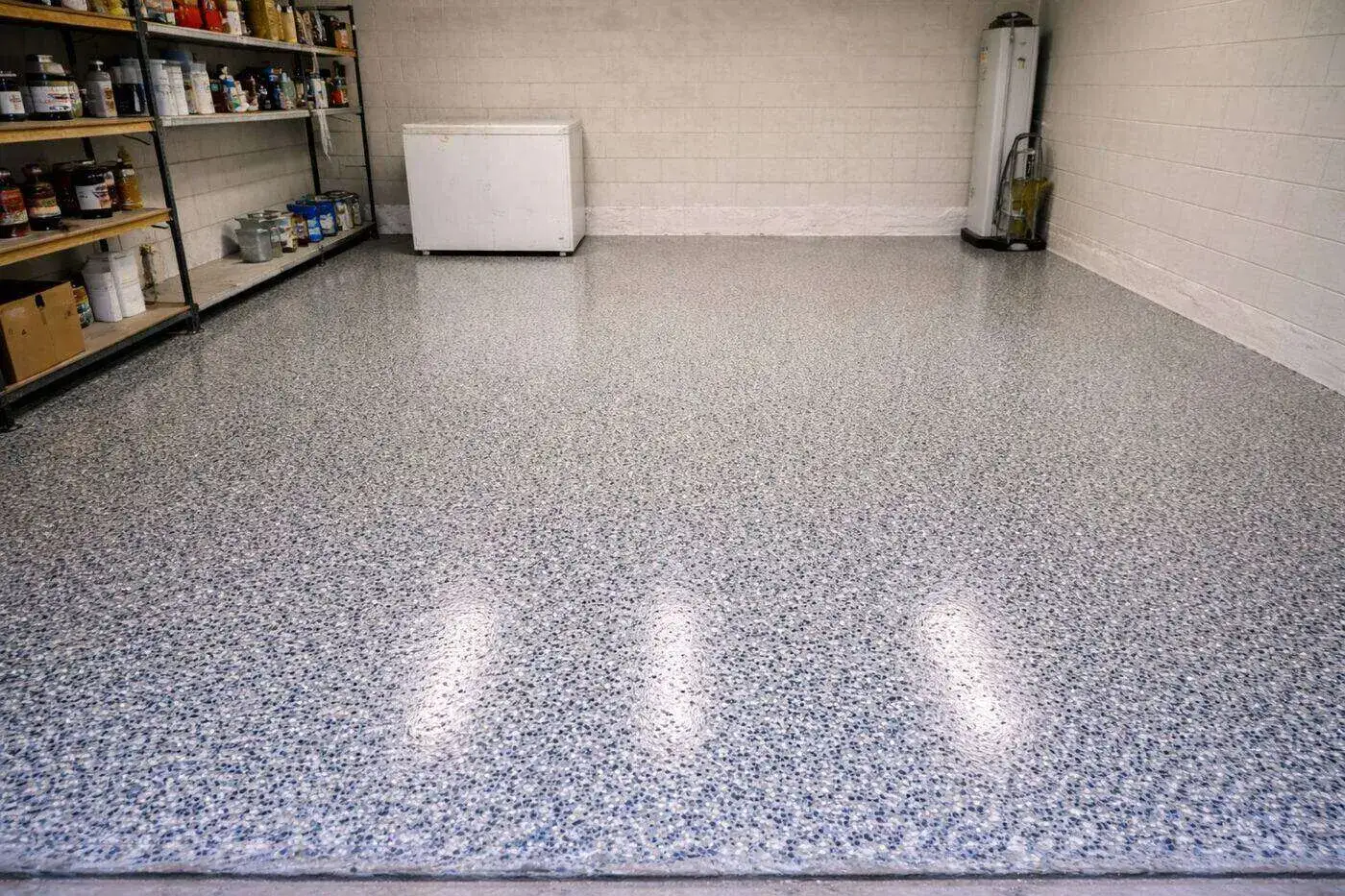
Actual installs across Miami-Dade — metallic interiors, coated garages, and more. Not stock photos.
Rated 5.0★ — Miami Reviews
What Miami-Dade homeowners say after the crew has packed up — verified on Google.
"I had Ascent Epoxy redo my garage floor last month. From start to finish they were professional, punctual, and the result is stunning — durable, smooth, and easy to clean. Worth every penny."
"Really professional crew. They put plastic over my wife's car, wore shoe covers when they came inside to use the bathroom, cleaned up everything. Little things like that matter to me."
"Amazing service. Love my Epoxy Floor."
Residential Epoxy FAQs — Miami
Common questions from Miami homeowners about residential epoxy flooring.
Residential epoxy flooring in Miami typically costs between $6 and $12 per square foot installed, depending on the finish and condition of your slab. Metallic epoxy finishes run higher than solid-color systems. Factors like crack repairs, moisture mitigation, and room size also affect your final price. Contact us at (305) 889-7045 for a free, no-obligation quote tailored to your home.
Epoxy flooring is an excellent choice for Miami kitchens. It creates a seamless, waterproof surface that resists stains from cooking oils, wine, and food spills. Unlike tile, there are no grout lines where mold can grow in Florida's humid environment. Epoxy is also easy to clean and available in decorative finishes that complement any kitchen design.
In most cases, existing flooring materials like tile or vinyl must be removed before epoxy application to ensure proper adhesion. We grind the concrete substrate and perform moisture testing, which is critical in Florida where slab-on-grade foundations are common. Our team evaluates your existing floor during the free consultation and recommends the best preparation approach. Call (305) 889-7045 to schedule yours.
A professionally installed residential epoxy floor typically lasts 20 years or more with proper care. Longevity depends on the quality of surface preparation, the coating system used, and how the floor is maintained. In Miami, our climate-tested installation process accounts for humidity and slab moisture to prevent premature peeling or delamination.
Epoxy can be successfully applied to previously flooded slabs, but thorough evaluation is essential. After hurricane-season storm flooding, we perform calcium-chloride and in-situ RH moisture testing and inspect the slab for damage. If moisture levels are elevated, we install a vapor-barrier mitigation system before coating. A seamless, non-porous epoxy floor is also far easier to clean and disinfect after flood exposure than bare concrete or tile. Call (305) 889-7045 for a free slab assessment.