In Miami-Dade, the price of an epoxy floor is set by your space and your slab: the size of the area, the condition of the concrete, how much moisture comes up through it, and the system and finish you choose. The single line item that sets Miami apart from a national quote is the slab moisture test and the mitigation primer that often follows it. That is why every floor is priced after a free on-site measurement, not pulled off a chart.
Here is the thing most cost articles skip: a number pulled off a national average does not automatically work in Miami-Dade. Our slabs sit on porous oolitic limestone with the water table sometimes only a few feet down, so the concrete itself behaves differently than a dry inland pour. Before anyone can price your floor, they have to know what the slab under your feet is doing. That is why this guide walks through the local conditions that set the price, not a chart of numbers that ignores them.
At Ascent Epoxy Miami, we put the moisture test up front and the price right behind it, because in this county the two are inseparable. Whether you are coating a two-car garage in Kendall, refinishing a showroom floor in Doral, or sealing a poolside cabana in Coral Gables, the factors below are what move the price of a Miami-Dade floor. We also include a free moisture test with every estimate, because guessing on a Miami slab is how floors fail. Want the number for your exact concrete? Call (305) 889-7045 for a free on-site estimate, or read on first.
How the Finish You Choose Affects the Price
Once the slab passes its moisture test, the finish you choose becomes the biggest swing in your final number. Each system looks different, wears differently, and carries a different price. Four finishes cover almost every residential job we install from Aventura down to Homestead. Here is what each one is, where it fits, and what pushes its price up or down.
| Finish | Look | Best For |
|---|---|---|
| Solid Color | Clean, glossy, single-tone | Utility garages, storage bays, equipment rooms |
| Flake / Chip | Textured, multi-tone | The most popular garage floor; hides marks, adds grip |
| Metallic | Flowing, marbled, three-dimensional | Showrooms, interiors, high-end designer floors |
| Quartz | Thick, hard, granular texture | Maximum durability and slip resistance |
Solid Color Epoxy
Solid color is the entry point: a clean, glossy, single-tone surface that wipes down in seconds. It suits a utility garage, a Hialeah storage bay, or a laundry and equipment room where function beats looks. The catch in Miami-Dade is that even a no-frills solid-color floor still earns a full diamond grind and, on a lot of ground-floor slabs, a moisture primer first. That extra prep is part of the price of even a simple Miami floor, and it is why the rock-bottom figures on national directories written for dry-climate slabs rarely match a real Miami quote.
Flake / Chip Epoxy
Flake is the default for Miami-Dade garages, and for good reason. Vinyl color chips are broadcast into the wet base coat to build a textured, multi-tone surface that hides hot-tire scuffs, masks the hairline cracks common in older Miami slabs, and gives you genuine grip when you walk in soaked from an afternoon thunderstorm. The blends range from quiet tans and grays to high-contrast looks that suit a modern home. In our humidity the smart build is a full flake broadcast capped with a polyaspartic topcoat rather than a bare epoxy coat; that combination is what shrugs off year-round moisture and the strong UV that pours through an open bay door. That topcoat adds to the price, and in this climate it earns it.
Metallic Epoxy
Metallic is the showpiece. Reflective pigments are suspended in clear resin and worked by hand as it cures to produce flowing, marbled, three-dimensional depth, so no two pours are ever the same. In Miami it tends to land in design-forward spaces: Brickell condos, Coral Gables home gyms, Aventura showrooms, and Wynwood-adjacent retail and studios where the floor is part of the brand. Price tracks complexity: a single-color marble effect is simpler to lay than a layered, multi-pigment design. Because much of the cost is the installer's hand skill, this is the finish where a cheap quote usually means a cheaper-looking floor.
Quartz Epoxy
Quartz is the heavy-duty option. Colored quartz granules are broadcast into the resin to build a thicker, harder, aggressively slip-resistant surface that takes constant traffic, impact, and wash-downs without flinching. Around Miami-Dade you will find it in restaurant kitchens along Calle Ocho, medical and dental clinics, gym locker rooms, and the food-service spaces that get hosed nightly, though it also makes sense in a home where durability is the whole point. Quartz is almost always specified per project rather than priced off a chart, so for a commercial space plan on a walkthrough before you get a firm number.
Not Sure Which Finish Fits Your Space?
Tell us about your slab and your goals. We will recommend the right system and give you a real number, free.
What Sets the Price of a 2-Car Garage in Miami
The two-car garage is the project we quote most often in Miami-Dade. A typical Miami two-car bay measures 400 to 500 square feet, and a complete quote for it covers the humidity-rated build this county needs: the moisture test, full diamond-grind prep, crack and spall repair, the epoxy base coat, the flake broadcast, and a UV-stable polyaspartic or polyurethane topcoat, not a thin two-coat job that peels by next hurricane season.
Beyond the size of the bay, two factors move the price most, and they are both about the concrete, not the color. The first is slab condition: an older Little Havana or Coral Way garage with surface spalling needs more repair time than a five-year-old slab in a newer Doral subdivision. The second is moisture mitigation, which we cover in detail below. Choosing a metallic floor for the same garage also raises the total, because metallic is far more material- and labor-intensive to lay.
| Price Factor | Why It Matters on a Miami 2-Car Garage |
|---|---|
| Size of the space | Most 2-car bays run 400–500 sq ft; more floor means more material and more grinding |
| Slab condition | Cracks and spalling in older slabs are routed and filled before any resin goes down |
| Moisture reading | A slab that tests high needs a moisture-mitigation primer under the coating |
| System and finish | Flake with a polyaspartic topcoat is the most popular build; metallic takes more material and labor |
Notice that every factor is about the concrete and the build, not a shortcut. In Miami-Dade the prep this climate demands cannot be skipped, so a two-car quote that comes in far below the others is almost certainly leaving the moisture step, the grind, or the topcoat off the page.
Why a Miami-Dade Slab Costs More to Coat
The pricing tables online are built for a dry slab poured well above the water table. Miami-Dade is the opposite environment, and four local realities decide whether your floor lasts a decade or fails in a single rainy season. Understanding them is exactly why a fair Miami quote reads higher than a national average, and why the cheapest bid is so often the most expensive mistake.
1. The limestone water table and the moisture test
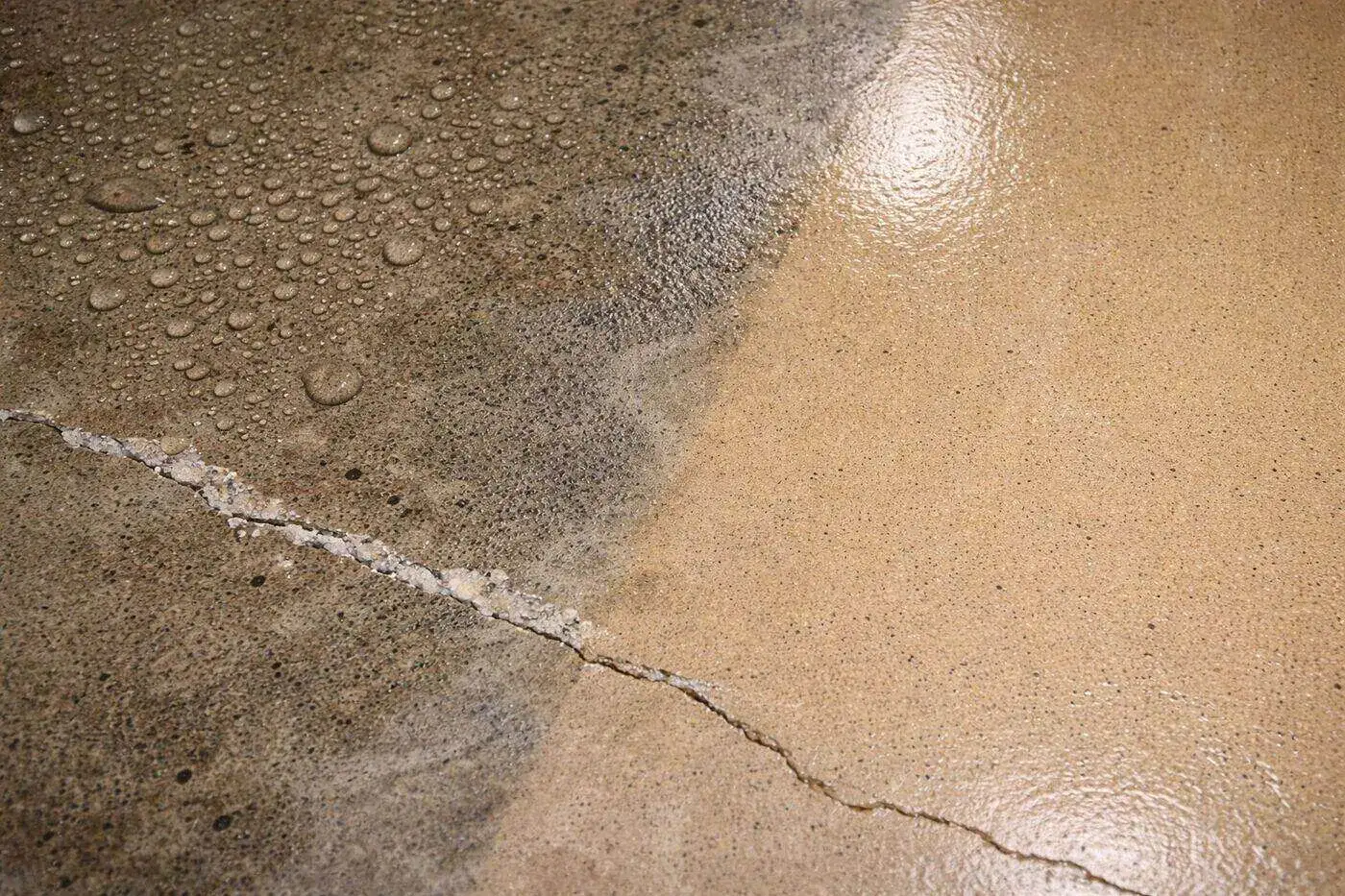
This is the line item that defines Miami pricing. Much of the county sits on porous oolitic limestone, and groundwater can sit just a few feet beneath your slab. That water does not stay put: it wicks up as vapor through the concrete and pushes against the underside of any coating, popping bubbles and lifting flakes from below. The only way to know what your slab is doing is to test it, which is why we run a free moisture test before we quote. If the reading sits above the safe threshold, a moisture-mitigation primer is not optional, and it becomes part of the quote. A contractor who skips the test to win on price is the single most common reason Miami floors fail.
2. Humidity that fights the cure
Miami runs humid essentially year-round, and warm, damp air interferes with how a coating cures. A standard slow-cure epoxy can blush, cloud, or never harden fully when it is laid in this much moisture. The fix is a polyaspartic or polyurea topcoat, which kicks off faster, tolerates humidity, and resists yellowing. It costs more than a plain epoxy cap on the same flake spec, but in Miami-Dade it is not a luxury add-on; it is the difference between a floor engineered for this air and one that was poured for somewhere else.
3. Sun, salt air, and hurricane season
Three coastal stresses stack on top of the moisture problem here. The sub-tropical sun ambers and chalks any topcoat that is not UV-stable, fast, on a garage floor behind an open bay door or a sun-washed Brickell interior, which is why a UV-stable polyaspartic is the Miami baseline rather than an option. Salt air off Biscayne Bay attacks coatings at edges and open bays, so waterfront homes, pool decks, and open-bay warehouses in places like Miami Gardens get a thicker, more chemically resistant build. And hurricane season brings storm-surge and wind-driven water that can reach a ground-floor slab, so a properly sealed, moisture-mitigated floor is also part of how a Miami garage recovers cleanly after a flood event. Each of these nudges the spec up, and the recommendation will reflect how exposed your property actually is.
4. Miami's split labor market
Miami-Dade is two housing markets at once, and your quote reflects which one you live in. Luxury-coastal work in Coral Gables, Pinecrest, and the Brickell and Aventura high-rises leans toward designer metallics and tight scheduling around condo associations and elevator access, which costs more in labor and logistics. Dense-urban work in Hialeah, Little Havana, and Allapattah is more often a practical flake garage or a working commercial slab, where the value is in durable prep done right rather than a showpiece finish. Knowing which side of that line your project sits on is half of reading your number correctly.
Put simply: the limestone water table, the humidity, the coastal sun and salt, and a split labor market all raise the floor on what a lasting Miami coating costs. That prep is what makes the floor survive. For the deeper dive on how moisture wrecks a coating and the test that catches it first, read our companion guide on why epoxy floors fail in Miami and the moisture test that prevents it.
Which Finish Is Right for Your Project
The right finish is a function of how the space gets used and how exposed it is to Miami's climate. Match your project to one of these and you will be close.
- Working garage or storage bay: Solid color gives you a sealed, sweep-clean surface without paying for decoration you will not see behind parked cars.
- Most Miami-Dade garages: Flake is the default for a reason. It hides scuffs, grips when wet, and paired with a polyaspartic topcoat it is the best all-around value in this humidity.
- Condo, gym, or showroom interiors: Metallic turns the floor into a design feature, which is why it shows up in Brickell and Coral Gables interiors where appearance is the point.
- Kitchens, clinics, wash-down spaces: Quartz is the most durable and most slip-resistant build, and the standard for Miami restaurant kitchens and medical floors.
If you are a homeowner coating a garage anywhere in the county, the flake-plus-polyaspartic combination is the sweet spot nearly every time. It carries the look, the grip, and most importantly the humidity and UV defense a Miami slab actually needs.
What a Real Quote Should Include
A price per square foot tells you almost nothing on its own; what matters is the scope behind it. In a county where the slab itself is the main risk, two quotes at the same number can be completely different floors. Make every estimate spell out these five things so you are comparing like for like.
- The moisture test, in writing. In Miami-Dade this is non-negotiable. A reputable installer tests the slab before quoting; if a company never mentions moisture, that is your warning sign, not a saving.
- Diamond-grind prep. A coating only bonds to mechanically opened concrete. A quick acid wash is not the same thing, so the quote should state that the slab gets ground.
- Crack and spall repair. Older Miami slabs crack and spall; those should be routed and filled before any resin goes down. Confirm it is in the scope, not an upcharge later.
- The full UV-stable system. Base coat, decorative layer, and a UV-stable polyaspartic or polyurethane topcoat rated for our sun and humidity. A single thin coat is a coat, not a system.
- One bottom-line total. Ask for the all-in project price, because prep and topcoat, the parts you cannot see, are exactly where a cheap bid quietly disappears.
When one quote lands far below the rest, assume something on that list was cut, usually the moisture step, the grind, or the topcoat, or a diluted consumer-grade product was substituted. Those omissions feel like a deal for a year and then cost you the entire floor when it bubbles or delaminates in the wet season.
Frequently Asked Questions
How much does epoxy flooring cost in Miami-Dade?
Every floor is priced after a free on-site measurement, because the price depends on the size of the space, the condition of the slab (cracks, old coatings, moisture), the system and finish you choose, and the prep the concrete needs. In Miami-Dade the slab moisture test matters most: the high water table can push vapor up through the concrete, and a slab that reads high needs a moisture-mitigation primer before the coating goes down. Call (305) 889-7045 or request a free estimate for an exact price, with no obligation.
How much does it cost to epoxy a 2-car garage in Miami?
A standard Miami 2-car garage is about 400 to 500 square feet, and it is priced after a free on-site measurement. The price depends on the condition of the slab, the moisture test result, and the system you choose. A quality flake floor includes the moisture test, diamond-grind prep, crack and spall repair, the base coat, the flake broadcast, and a UV-stable polyaspartic topcoat, while a designer metallic floor takes more material and labor. Be skeptical of any quote far below the others, since that usually means the moisture or prep step was left out. Call (305) 889-7045 for an exact price.
Why is epoxy flooring more expensive in Miami than the national average?
Miami-Dade sits on porous oolitic limestone with a high water table, plus year-round humidity, sub-tropical sun, and salt air off Biscayne Bay. A floor that lasts here needs a slab moisture test, often a moisture-mitigation primer, and a UV-stable polyaspartic topcoat. Those steps cost more than a basic inland install but are exactly what keep a Miami floor from bubbling and peeling.
Is a moisture test really necessary on a Miami slab?
Yes, and it is the most important step in this market. Because the county sits on porous limestone with the water table only a few feet down, many Miami slabs push enough vapor up through the concrete to break a coating from underneath. We include a free moisture test with every estimate, because skipping it is the most common cause of premature epoxy failure in South Florida.
Which epoxy finish gives the best value in Miami?
For most Miami-Dade homeowners coating a garage, a full flake broadcast with a polyaspartic topcoat is the sweet spot. It hides marks, grips when wet, looks finished, and most importantly delivers the humidity and UV defense this coastal climate demands.
What should a real Miami epoxy quote include?
A complete Miami quote should spell out the slab moisture test, diamond-grind prep (not an acid wash), crack and spall repair, the full coating system with a UV-stable polyaspartic or polyurethane topcoat, and one bottom-line total. If a quote comes in well below the others, look for skipped moisture testing, no grinding, or a missing topcoat.
Get Your Personalized Miami Epoxy Quote
Knowing what moves the price gets you most of the way, but the only number that truly counts is the one for your concrete. At Ascent Epoxy Miami, every estimate starts with a free moisture test, a real look at the slab, and a straight conversation about which finish fits your space, your exposure, and your budget. No pressure and no bait-and-switch, just a clear all-in price and a system engineered for the Miami-Dade water table and climate. Blake and the crew install it, and they install it the way this county requires.
Ready to get your number? Call (305) 889-7045 or request a free quote online. See the full epoxy flooring Miami lineup for more detail. We coat floors across Miami, Doral, Hialeah, Coral Gables, Kendall, Aventura, Pinecrest, Homestead, and the surrounding communities throughout Miami-Dade County.