Garage Floor Epoxy Miami — Coatings That Hold Up to Salt Air, Heat & Hot Tires
From Coral Gables driveways to high-rise parking and import-warehouse bays near the Port and the river, Miami garages take a beating from coastal humidity and exotic-car traffic. We test the slab's moisture before any coating touches it, then lay a hot-tire-proof flake or metallic system — oil-spill resistant, mop-clean, and back in service in 1–2 days.
Why a Miami Garage Floor Needs More Than Off-the-Shelf Epoxy
Miami sits on porous oolitic limestone, and most garage slabs in the county were poured directly on grade over a water table that runs only a few feet down. That bedrock wicks groundwater upward, so vapor pushes through the concrete around the clock — whether you are in a single-family garage in Pinecrest, a townhome in Doral, or a stall under a Brickell or Edgewater high-rise. Layer on the hot-tire pickup from cars baking in the sun, the oil and transmission drips of daily commuting, and the salt-laden air that drifts in off Biscayne Bay, and bare concrete simply gives up: it stains, dusts, and crumbles at the joints.
A coating only beats those conditions when the prep is built for them. We start with diamond grinding to open the slab, then run an ASTM moisture test (calcium-chloride or in-situ RH) on every floor before we quote — because in a market where trapped vapor is the leading reason garage coatings fail, skipping that step is how an installer's work peels off in a season. When readings come back high, a moisture-mitigating vapor-barrier primer goes down first to seal the limestone's dampness away from the resin. Only then do we build the floor: a high-solids epoxy body coat broadcast with decorative flake or poured as a metallic, locked under a UV-stable polyaspartic topcoat that shrugs off oil, brake dust, and the relentless coastal sun.
The payoff is the same finish that earns its keep in Miami's hospitality and service economy — the seamless, wipe-clean surface restaurants, boutique hotels, and import warehouses near the Port and the Miami River rely on, scaled down to your own garage. It resists hot tires, cleans up with a mop, and holds its gloss for 10 to 30 years, whether you are protecting an everyday driver or a collector car in a luxury Art Deco building on the Beach. Compare it against our residential epoxy and commercial epoxy work, or open the Miami pricing guide for what a project like yours runs.
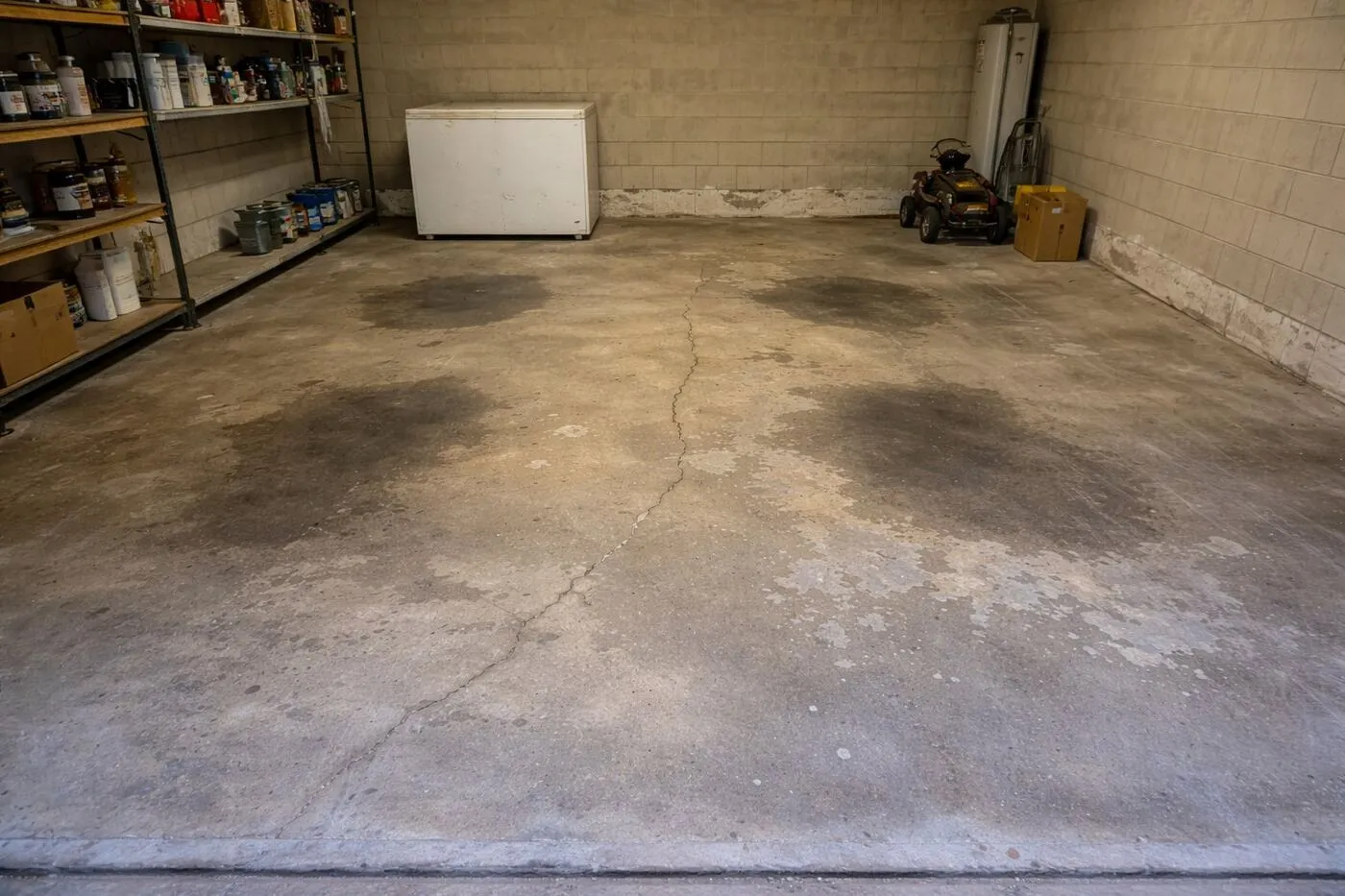 Before
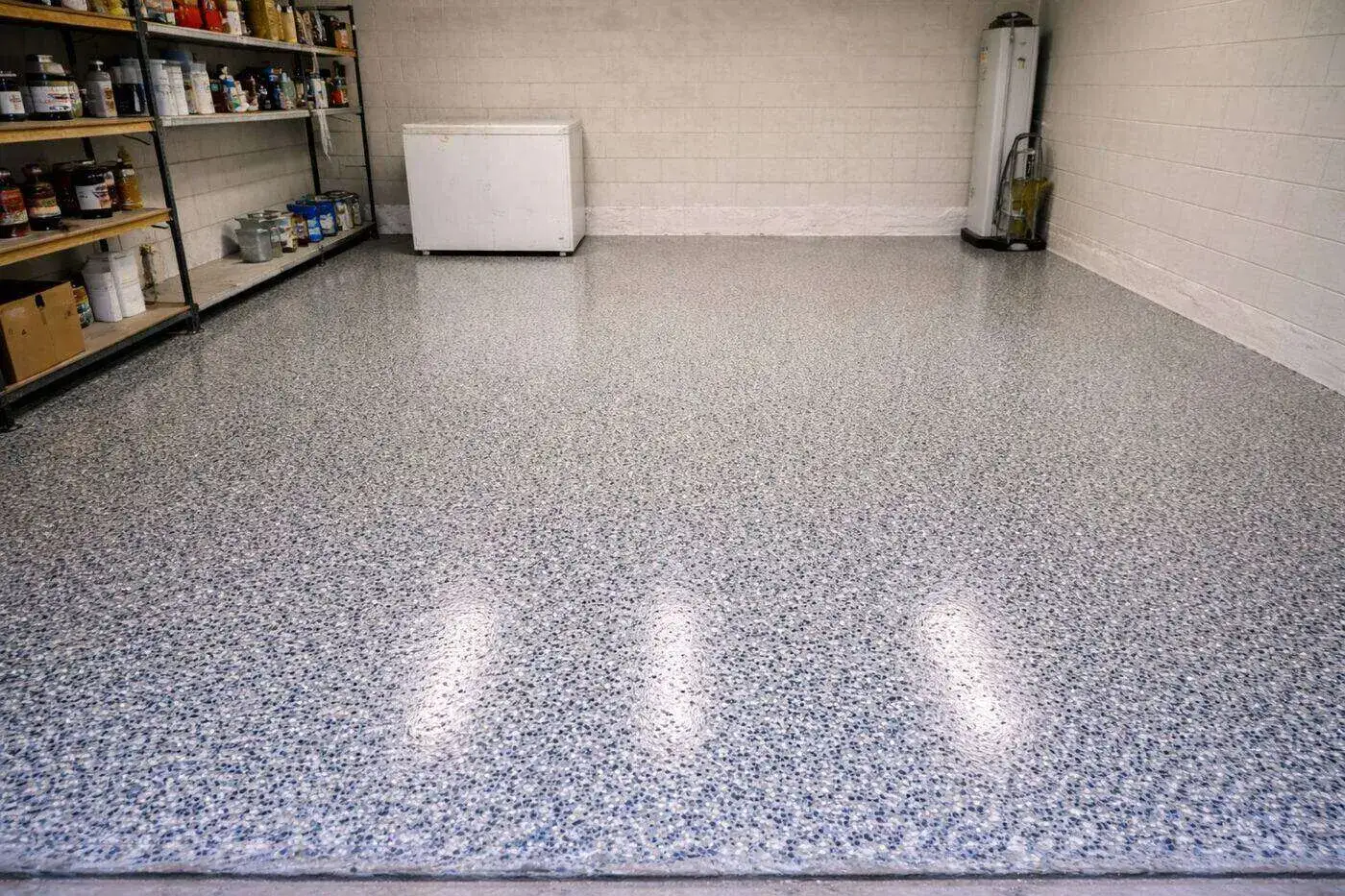 After
After
What a Coated Garage Floor Delivers in Miami
In a city where the slab stays damp and the cars keep coming, the right coating does more than look sharp. Here are six reasons Miami-Dade owners stop fighting bare concrete.
200°F
Hot Tire Resistant (200°F+)
Tires come home scorching after a crawl up I-95 or the Palmetto in August. Our polyaspartic topcoat locks down so the coating will not lift or print when a hot tire parks on it — no more peeled patches under the wheels.
Why Florida heat matters →0 stains
Stain-Proof Surface
Motor oil, coolant, brake dust, even the road grime that follows a car off the causeway sit on top of the sealed film instead of soaking in. A quick wipe and the floor reads like new — the same forgiveness a busy shop or restaurant kitchen counts on.
Anti-Slip
Walk Safely on Wet Floors
Afternoon storms and dripping cars mean a Miami garage floor is wet far more often than it is dry. Broadcast flake plus an anti-slip additive in the topcoat give you traction underfoot even when water tracks in off the driveway.
10–30 yrs
10-30 Year Lifespan
A coating that is ground in correctly and topped with polyaspartic runs a decade at the low end. When the moisture step is handled right on a limestone slab, plenty of Miami garages go 20 to 30 years before a recoat is even a conversation.
How humidity affects durability →5 min
5-Minute Maintenance
A broom and a damp mop are the whole routine — no resealing, no waxing, no annual touch-ups. With no joints or open pores, salt residue and dust have nowhere to settle, so upkeep stays a five-minute job.
+$5K–$10K
Closes the Tour at Listing Time
In Miami's competitive housing market, a showroom-clean garage is the kind of detail that closes a tour. Agents routinely point to a finished epoxy floor as added buyer appeal that helps a listing show its best.
See full pricing guide →Our Miami Garage Process — Read the Slab, Then Build the Floor
Five steps from a free in-garage visit to a cured, driveable floor — with the moisture work that a limestone slab demands built in from the start.
Free Consultation
~45 minWe come to your garage anywhere in Miami-Dade, measure the bay, look over the slab, and walk you through flake and metallic options against your space. You leave with a written quote in hand — no ballpark guessing. Schedule yours free.
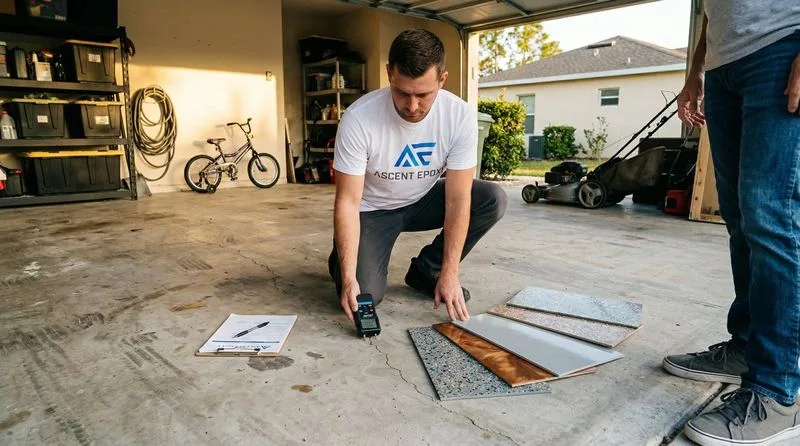
Surface Preparation
2–4 hrsDiamond grinding cuts back the slab's surface so the resin can key into the concrete. Just as important here, we take calcium-chloride and relative-humidity readings — the make-or-break check on a damp Miami limestone floor that decides whether a vapor primer is needed.
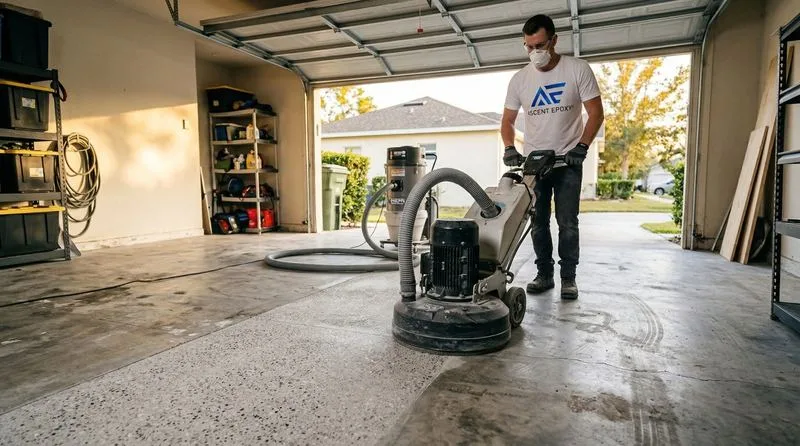
Crack & Joint Repair
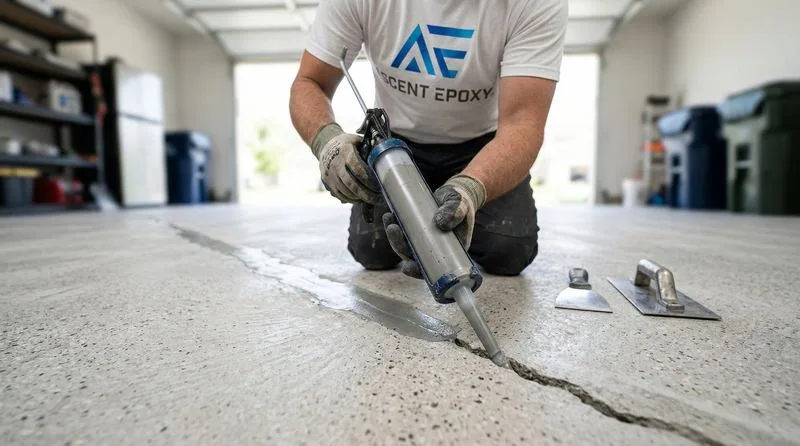
30–60 minWe pack cracks, spalls, and control joints with a semi-flexible polyurea filler so they sit flush and movement in the slab does not telegraph a hairline up through the finished coating.
Multi-Coat Application
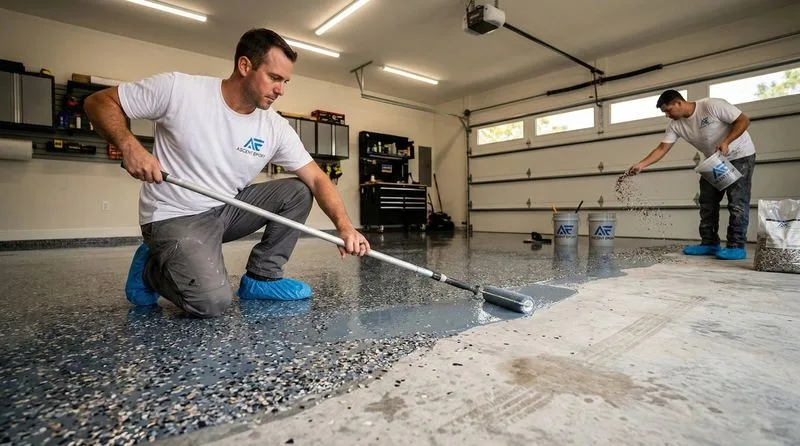
3–5 hrsWhen the readings call for it, a moisture-mitigating primer goes down first to seal the slab. Then comes the high-solids epoxy body coat — broadcast with flake or poured as a metallic — sealed under a UV-stable polyaspartic topcoat tuned for hot tires and coastal sun.
Cure & Enjoy
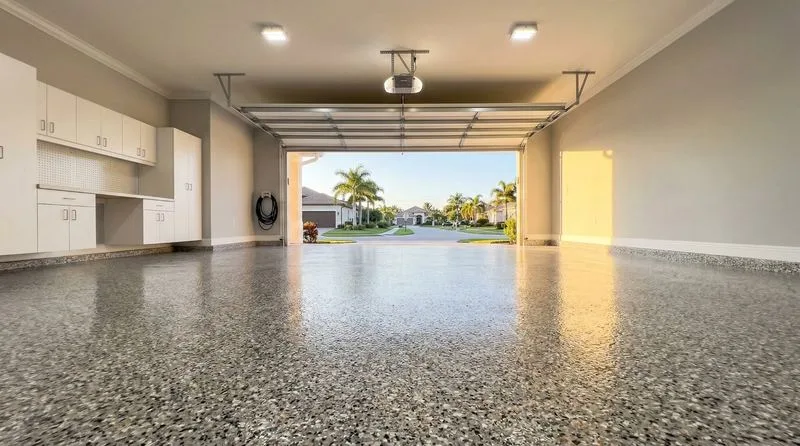
5–7 daysYou can walk on it in about 24 hours and roll the car back in after 5 to 7 days of cure. We hand off plain-language care steps and your written 25-year warranty — covering delamination, peeling, cracking, and adhesion failure, and put in writing before you ever leave a deposit.
Ready to Start? Step 1 Is Free.
Schedule your no-obligation consultation and see finish samples in your space.
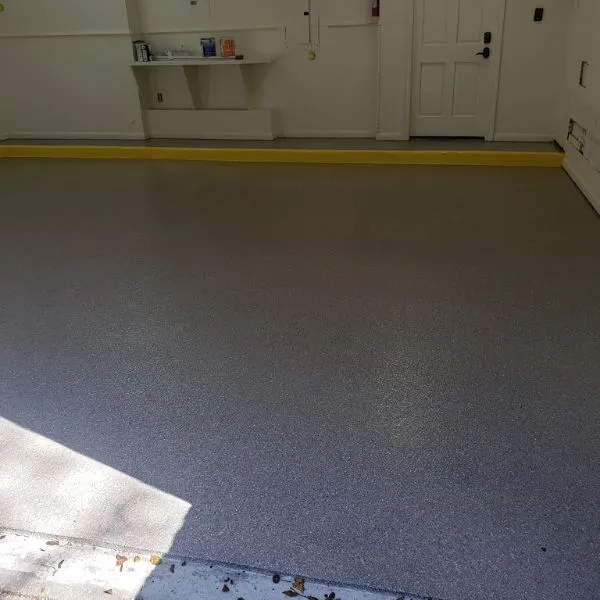
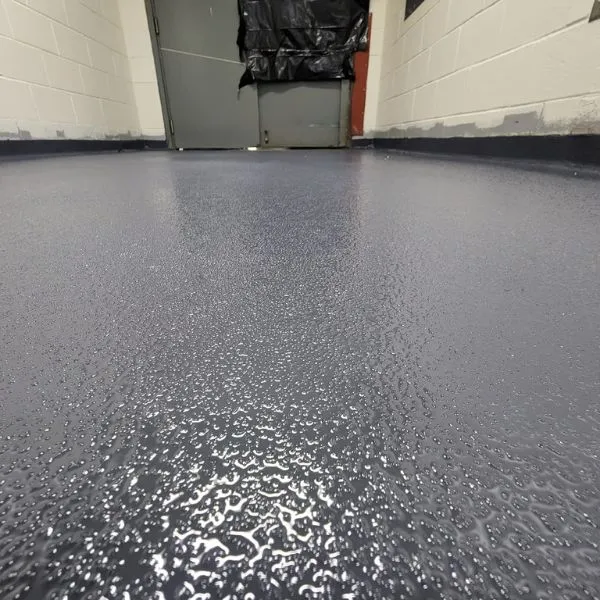
Miami Garage Floors, Before & After
Actual coatings from driveways and home garages around Miami-Dade — not stock imagery.
Rated 5.0★ — Miami Reviews
Real reviews from real Miami homeowners — verified on Google.
"I had Ascent Epoxy redo my garage floor last month. From start to finish they were professional, punctual, and the result is stunning — durable, smooth, and easy to clean. Worth every penny."
"Really professional crew. They put plastic over my wife's car, wore shoe covers when they came inside to use the bathroom, cleaned up everything. Little things like that matter to me."
"Amazing service. Love my Epoxy Floor."
Garage Epoxy FAQs — Miami
Answers to the most common questions Miami homeowners ask about garage floor epoxy.
Garage floor epoxy in Miami typically costs $5 to $12 per square foot, depending on the coating system and surface condition. For a 1-car garage, expect to pay $1,000 to $3,000. A standard 2-car garage runs $2,500 to $4,000 in flake, rising toward $6,000 for a premium metallic finish. Factors that affect pricing include the amount of crack repair needed, whether moisture mitigation is required (common on high-water-table Miami-Dade slabs, adding roughly $1.50-$3 per square foot), and which coating system you choose (solid color, decorative flake, or metallic). See our full Miami pricing guide for detailed breakdowns.
Miami's regional humidity averaging around 75%, combined with a high water table under most Miami-Dade slabs, makes moisture testing and proper surface preparation critical for a lasting garage epoxy floor. Moisture vapor drives up through the concrete and, if it is trapped under the coating, causes epoxy to bubble, peel, or delaminate within months of installation. We run calcium chloride testing and in-situ relative humidity probes (ASTM F1869 / F2170) to verify slab moisture is within acceptable ranges before applying any coating. When transmission is elevated, a moisture-mitigating vapor-barrier primer is applied first to create a barrier between the slab and the epoxy system.
Garage epoxy floors in Florida last 10 to 30 years when installed with proper surface preparation and moisture testing. The wide range depends on the coating system used, the quality of prep work, and how the garage is used. High-solids epoxy base coats paired with polyaspartic topcoats deliver the longest service life because they resist UV yellowing, hot-tire pickup, and chemical exposure better than entry-level systems.
Yes, you can park on your new epoxy garage floor after a 5 to 7 day full cure period. Light foot traffic is typically safe within 24 hours of the final coat, and you can place objects on the surface after 48 to 72 hours. Our professional-grade epoxy and polyaspartic topcoats are specifically formulated to resist hot-tire pickup, so you will not see marks or peeling from parking warm vehicles on the surface.
October through April is the best time to epoxy a garage floor in Miami. Lower humidity and cooler temperatures during these months create ideal conditions for epoxy adhesion and curing. Concrete surface temperatures between 50°F and 90°F are optimal for most epoxy systems. Summer installations are still possible but require additional climate control measures, such as dehumidifiers and fans, to manage moisture and heat during the application and cure stages.