In Miami, the best floor is usually not epoxy or polyaspartic on its own — it is a hybrid that uses both: an epoxy base coat topped with a polyaspartic topcoat. Epoxy bonds to the concrete and builds the thickness and strength; polyaspartic seals the system and protects it against our humidity and sub-tropical UV. The "which one wins" question has a better answer here: use each for what it does best.
If you have been quoted for a garage floor in Miami, you have probably heard both words thrown around, sometimes as if they were the same thing and sometimes as if you have to pick a side. They are not the same thing, and in our climate you usually should not have to choose. This guide explains what each material actually is, lays them out side by side, and shows why the topcoat is the part that matters most for a floor that has to survive Miami-Dade humidity, heat, and salt air.
At Ascent Epoxy Miami, we install both materials every week, and the recommendation we give most homeowners coating a garage in Kendall, Doral, or Coral Gables comes down to the same hybrid system. Here is the reasoning, with real numbers. Want a recommendation for your exact slab? Call (305) 889-7045 for a free assessment, or read on first.
What Epoxy Actually Is
Epoxy is a thermosetting resin. You mix two parts — a resin and a hardener — and a chemical reaction kicks off that cures the liquid into a hard, rigid plastic bonded to your concrete. That bond is the whole point: properly applied over a diamond-ground slab, epoxy grips the concrete and builds a thick, durable film that fills minor imperfections and creates a solid foundation for whatever goes on top of it.
Epoxy's strengths are adhesion and build. It bonds hard to prepared concrete, it goes on thick, and it is the workhorse base layer of almost every quality floor system. It is also where the decorative flake or color usually lives, because the wet base coat is what holds the broadcast chips.
Its weaknesses show up in cure and exposure. Standard epoxy cures slowly — often a day or more before light traffic and several days before a vehicle — and that slow cure is exactly when Miami's humidity causes trouble. In high humidity, epoxy can blush, leaving a hazy or greasy-looking film on the surface as it cures. And on its own, epoxy is not UV-stable: left exposed to direct sun, it ambers and chalks over time. Those two facts — humidity-sensitive cure and poor UV stability — are why epoxy alone is rarely the finished answer in South Florida.
What Polyaspartic Actually Is
Polyaspartic is a variant of polyurea, a different chemistry from epoxy. It was originally developed as a fast, durable protective coating for steel and concrete in demanding industrial settings, and it has since become the go-to topcoat for high-performance floors. Where epoxy is rigid, polyaspartic stays flexible, and where epoxy is slow, polyaspartic is fast.
Its strengths are exactly the things epoxy lacks. Polyaspartic cures quickly — many systems are walk-ready in hours and ready for light vehicle traffic the next day. It is UV-stable, so it resists the yellowing and chalking that plague exposed epoxy. It tolerates moisture and temperature swings during cure far better than epoxy, which matters enormously in our climate. And it is flexible enough to ride out the expansion and contraction a slab goes through.
It has trade-offs too. Polyaspartic goes on thin — it is a topcoat, not a thickness-builder, so it does not replace a base layer. The material costs more per gallon than epoxy. And its fast cure is a double-edged sword: the installer has a short working window before the product sets, so it is unforgiving of slow or sloppy application. That fast working time is a big part of why polyaspartic should be installed by a professional rather than from a kit.
Epoxy vs Polyaspartic: Head-to-Head
Here is how the two materials compare on the factors that actually decide how a Miami floor performs.
| Factor | Epoxy | Polyaspartic |
|---|---|---|
| Cure time | Slow — hours to a full day before light traffic, days before a vehicle | Fast — walk-ready in hours, light vehicle traffic next day |
| Humidity tolerance | Sensitive — can blush or haze curing in high humidity | High — cures reliably in Miami humidity |
| UV stability | Poor — ambers and chalks in direct sun | Excellent — UV-stable, resists yellowing |
| Abrasion / chemical resistance | Strong | Strong, with better scratch and stain resistance |
| Build thickness | Thick — builds the film and holds the flake | Thin — a topcoat, not a base builder |
| Working time | Forgiving — longer window to work the product | Short — sets fast, needs an experienced installer |
| Best use | Base coat, build, and the layer that holds decorative flake | Protective topcoat for UV, humidity, and fast return to service |
Read down the table and the pattern is hard to miss: the two materials are strong in almost exactly opposite places. Epoxy wins on build, adhesion, and forgiving installation. Polyaspartic wins on cure speed, humidity tolerance, and UV stability. That is the whole case for combining them, which is what most quality Miami floors do.
Want the Right System for Your Slab?
Tell us about your space and how you use it. We will recommend epoxy, polyaspartic, or the hybrid — and give you a real number, free.
Why the Topcoat Matters So Much in Miami
In a dry, temperate market, a basic epoxy topcoat can survive for years, which is why national how-to content treats the topcoat as an afterthought. Miami is a different environment, and here the topcoat is the part of the system that does the hardest work. Four local conditions are why.
Humidity. Miami's relative humidity averages around 75 percent year-round. That moisture is hardest on a coating while it is curing, and it is the reason a humidity-tolerant topcoat earns its place: polyaspartic cures cleanly in conditions that can make a plain epoxy topcoat blush or haze.
Heat. Year-round sub-tropical heat keeps slab temperatures high, which speeds and complicates the cure of a slow epoxy. A polyaspartic topcoat is far more tolerant of the temperature swings a Miami slab goes through, day to night and season to season.
UV. Sub-tropical sun ambers and chalks any coating that is not UV-stable, and it does it quickly on a garage floor with the bay door open or any sun-exposed interior. A UV-stable polyaspartic topcoat resists that yellowing, so the floor keeps its color instead of fading.
Salt air. Coastal Miami-Dade properties face salt-air exposure that degrades coatings at edges and open bays over time. It is a marginal factor on a closed residential garage but a real one near the water, where a tough, UV-stable topcoat is part of building a floor that lasts. If you want to know what sets the price of a Miami floor, see our Miami epoxy flooring cost guide.
The Hybrid System We Recommend
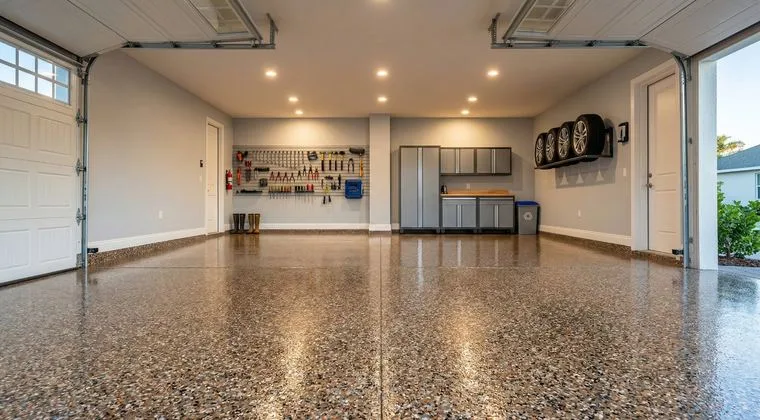
The system we install on most Miami garages and sun-exposed floors is the hybrid: an epoxy base coat for adhesion and build, decorative flake broadcast into that wet base, and a polyaspartic topcoat to seal everything and handle the UV and humidity. It uses each material for what it does best — epoxy for the foundation, polyaspartic for the protection — and it is the configuration that gives a Miami floor the best shot at a long, good-looking life.
On the most common project, a standard Miami two-car garage of roughly 400 to 500 square feet, the hybrid build covers full concrete prep, crack and spall repair, the epoxy base coat, the flake broadcast, and the polyaspartic topcoat. The topcoat is the layer that does the hardest work in this climate, so make sure it is named on any quote you compare.
The price of a hybrid floor depends on the size of the space, the condition and moisture reading of the slab, and the finish you choose, so every floor is priced after a free on-site measurement. For the local factors that set a Miami price, read our how much epoxy flooring costs in Miami guide.
Which Should You Choose?
The hybrid is the default for a reason, but it is not the only valid answer. Here is how to think about it based on how you actually use the space.
- Tight budget, interior storage that never sees sun: An epoxy-only floor is acceptable. A climate-controlled interior storage room or a fully closed utility space with no direct UV does not lean as hard on the topcoat, so a quality epoxy system can do the job.
- Any Miami garage, sun-exposed, or coastal floor: Go hybrid. If the bay door opens, the room takes sun, or the property is near the water, the polyaspartic topcoat is what protects the floor from blushing, yellowing, and early failure. This is most residential projects in Miami-Dade.
- Commercial space that needs a fast return to service: Lean polyaspartic-heavy. When a business cannot afford to be closed for days, the fast cure of a polyaspartic-forward system gets the floor back in use quickly — often the next day — which is a real operational advantage for shops, showrooms, and clinics.
For most Miami homeowners, the honest recommendation is the hybrid flake floor with a polyaspartic topcoat. It balances build, durability, and the humidity and UV protection this climate demands, and it is what we would install in our own garage here.
Frequently Asked Questions
Is polyaspartic better than epoxy in Miami?
Neither one wins outright. Epoxy gives you a thick, hard, strongly bonded base; polyaspartic gives you a UV-stable, humidity-tolerant top layer. In Miami the best-performing floor is usually a hybrid that uses both — an epoxy base coat for build and adhesion, finished with a polyaspartic topcoat to handle the heat, humidity, and sub-tropical sun.
Is polyaspartic just expensive epoxy?
No. They are different chemistries. Epoxy is a two-part resin-and-hardener system; polyaspartic is a type of polyurea. Polyaspartic cures far faster, stays flexible, tolerates moisture during cure, and resists UV yellowing, where standard epoxy is rigid, slow-curing, and ambers in sunlight. Polyaspartic costs more per gallon, but it is a distinct material, not a premium-grade epoxy.
Can you put polyaspartic over epoxy?
Yes, and it is one of the most common professional configurations in Florida. The epoxy base coat is applied first to bond to the prepared concrete and build thickness, and a polyaspartic topcoat is applied over it to seal the system and protect against UV and humidity. This hybrid is the system we recommend for most Miami garages and sun-exposed floors.
Does polyaspartic yellow in the Florida sun?
A quality polyaspartic topcoat is UV-stable, so it resists the ambering and chalking that affects standard epoxy in direct sun. That is exactly why we use it as the top layer in Miami, where garage floors with the bay door open and sun-exposed interiors take heavy UV. Standard epoxy left as a topcoat will yellow here; a polyaspartic topcoat is what keeps the floor looking new.
How long does a polyaspartic floor take to cure?
Polyaspartic cures fast — many systems are walk-ready in a few hours and take light vehicle traffic the next day, compared with the several days standard epoxy can need before a vehicle goes back on it. That fast cure is a major advantage for commercial spaces that cannot stay closed, but it also gives the installer a short working window, which is why polyaspartic should be installed by a pro.
Is a hybrid epoxy-polyaspartic floor worth the extra cost in Miami?
For most Miami floors, yes. The polyaspartic topcoat costs more than a plain epoxy topcoat, but in our humidity, heat, UV, and coastal salt air, it is what protects the floor from blushing, yellowing, and early failure. That makes it the difference between a floor built for Miami and one that is not. The exact price for your floor is set after a free on-site measurement.
Get Your Free Miami Floor Assessment
The right call between epoxy, polyaspartic, and the hybrid depends on your slab, how the space gets used, and how much sun and moisture it sees. The only way to nail it down is to have your concrete looked at in person. At Ascent Epoxy Miami, every assessment starts with a real look at your slab, moisture testing, and an honest conversation about which system makes sense for your space and budget — no pressure, no bait-and-switch.
Ready to start? Call us at (305) 889-7045 or request a free quote online. We serve Miami, Doral, Hialeah, Coral Gables, Kendall, Aventura, Pinecrest, Homestead, Miami Gardens, North Miami, and the surrounding communities across Miami-Dade County.
Related Articles
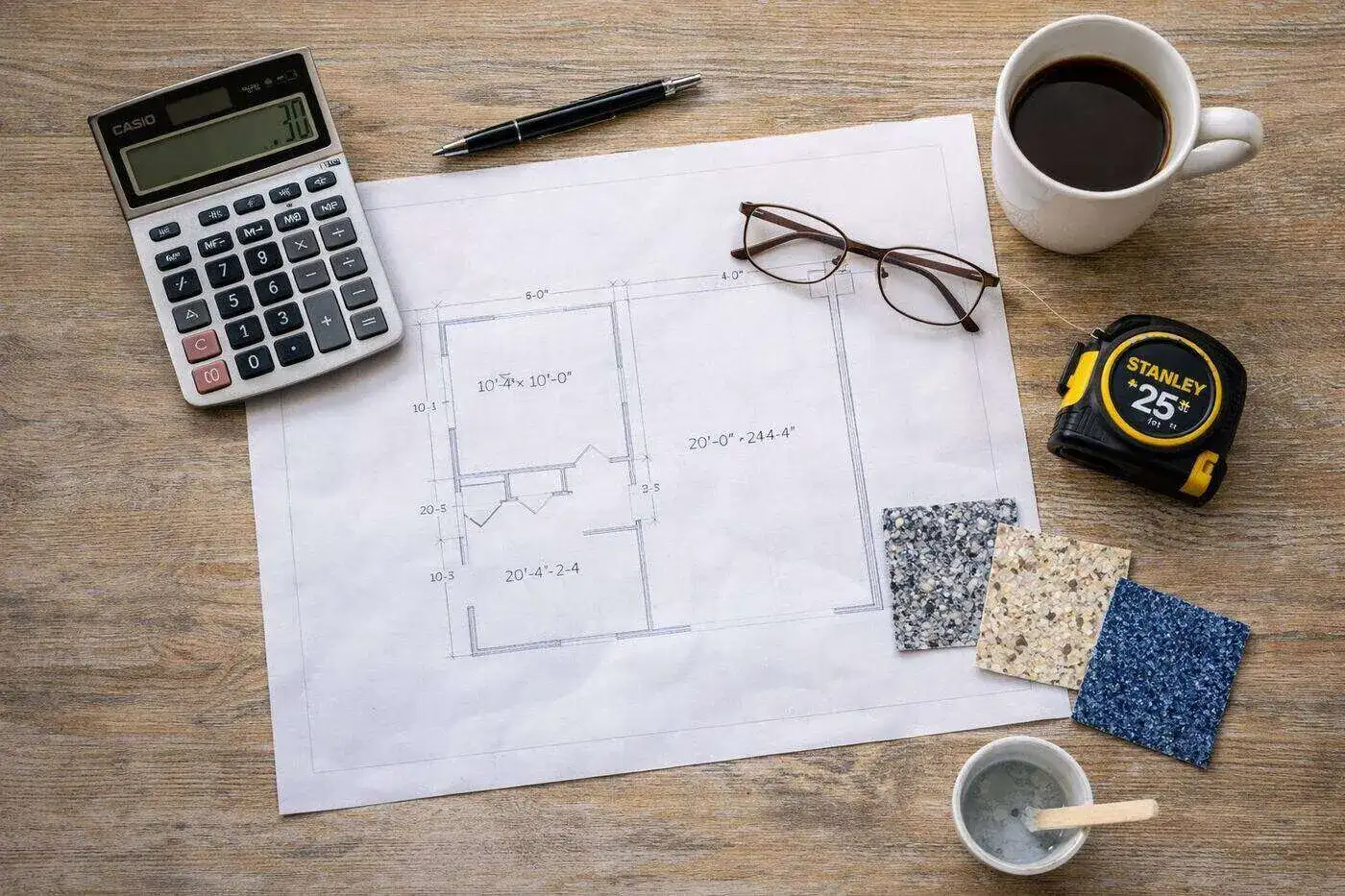
How Much Does Epoxy Flooring Cost in Miami? (2026 Guide)
What sets the price of a Miami floor: size, slab condition, moisture and finish.
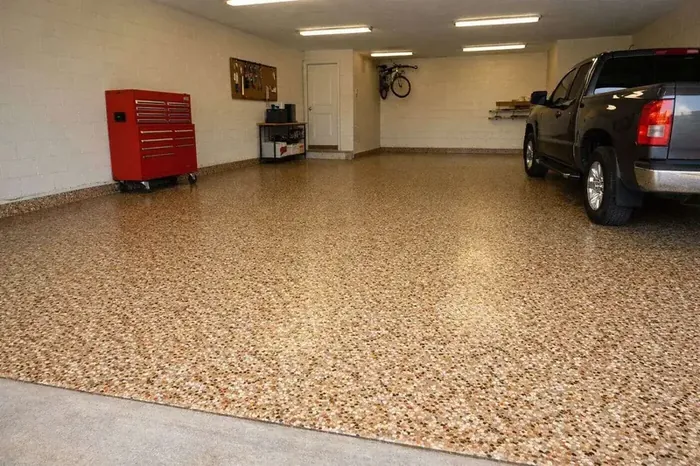
How Long Does an Epoxy Floor Last in Miami?
What lifespan to expect in our climate and the prep that makes a floor go the distance.
How to Clean & Maintain an Epoxy Floor in Miami
Simple routines that keep a Miami epoxy floor looking new for years.