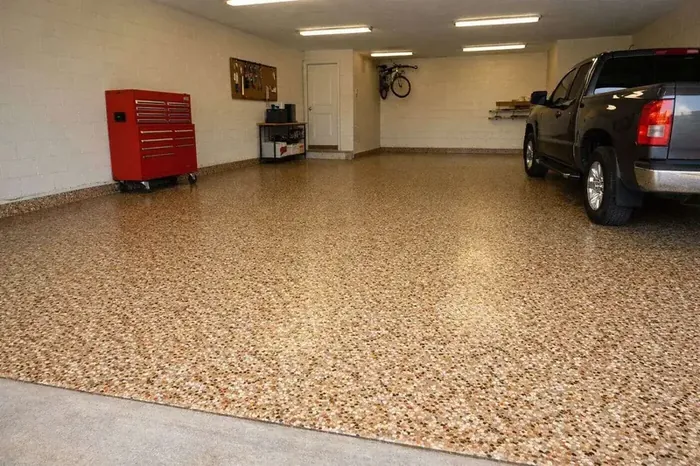
A professionally installed residential epoxy or polyaspartic floor in Miami lasts 10 to 20 years. A commercial floor under heavy traffic lasts about 5 to 10 years before it needs a recoat. A cheap DIY kit poured over an untested slab can fail in 1 to 3 years.
Lifespan is the question every homeowner asks, and it is the hardest one to get a straight answer to. The honest answer is that "epoxy" is a range, not a number. The same garage can get a floor that lasts two decades or one that peels before the second summer, and the difference has almost everything to do with how the slab was prepared and how well the system was matched to Miami's climate.
This guide lays out realistic lifespans by system, explains what shortens a floor's life in our high-humidity, high-UV, high-water-table market, and shows what makes a floor go the distance. Want a straight read on your own slab? Call (305) 889-7045 for a free evaluation, or read on first.
The Short Answer
For a residential floor in Miami built the right way, plan on 10 to 20 years of service before a full refinish. With a quality topcoat and a simple recoat partway through, plenty of floors push past 20. A commercial or industrial floor in a warehouse, shop, or kitchen takes far more abuse, so the realistic window there is 5 to 10 years between major refreshes.
The catch is that those numbers assume a professional tested the slab, ground it properly, and used a system rated for sub-tropical conditions. A DIY big-box kit skips all three, which is why a kit that "lasts 5 years" in a dry Midwest garage often fails in 1 to 3 years here. In Miami, the install matters more than the product: a mid-tier resin installed correctly will outlast a premium resin over a dusty, untested slab every time.
Lifespan by System
Not all epoxy floors are built to last the same amount of time. The system you choose, and the prep underneath it, sets the ceiling on how long it performs. Here is a realistic look at each common system and what eventually ends its life.
| System | Typical Lifespan | What Ends Its Life | Notes |
|---|---|---|---|
| DIY big-box kit | 1–3 years | No moisture test, acid wash instead of grind, thin resin | Peels first at edges and under tires; rarely worth the redo cost |
| Single solid-color epoxy | 5–10 years | Topcoat wear, UV ambering if not UV-stable | Good for utility spaces; recoat extends it well |
| Flake epoxy + polyaspartic topcoat | 15–20+ years | Gradual topcoat wear in traffic lanes | The Miami sweet spot; humidity- and UV-tolerant |
| Metallic epoxy | 10–20 years | Topcoat scuffing; needs UV-stable clear over it | Interior and showroom use; protect from direct sun |
| Quartz epoxy | 15–20+ years | Heavy impact and abrasion over time | Most durable; common in kitchens and clinics |
| Commercial heavy-traffic | 5–10 years | Forklifts, pallet jacks, constant cleaning chemicals | Recoat on a schedule to reset the wear surface |
The pattern is clear. The longest-lasting residential systems all share a thick, full-build coating and a UV-stable topcoat, and the shortest-lasting one skips the prep entirely. A flake floor with a polyaspartic topcoat is the configuration we recommend most often in Miami because it sits at the top of the lifespan range while staying affordable for a typical garage.
What Shortens an Epoxy Floor's Life in Miami
Miami is one of the harder climates in the country for a floor coating. The same conditions that make the city beautiful work against a coating that was not specified for them. These are the things that cut a floor's life short here, roughly in order of how often they cause trouble.
Slab Moisture and the High Water Table
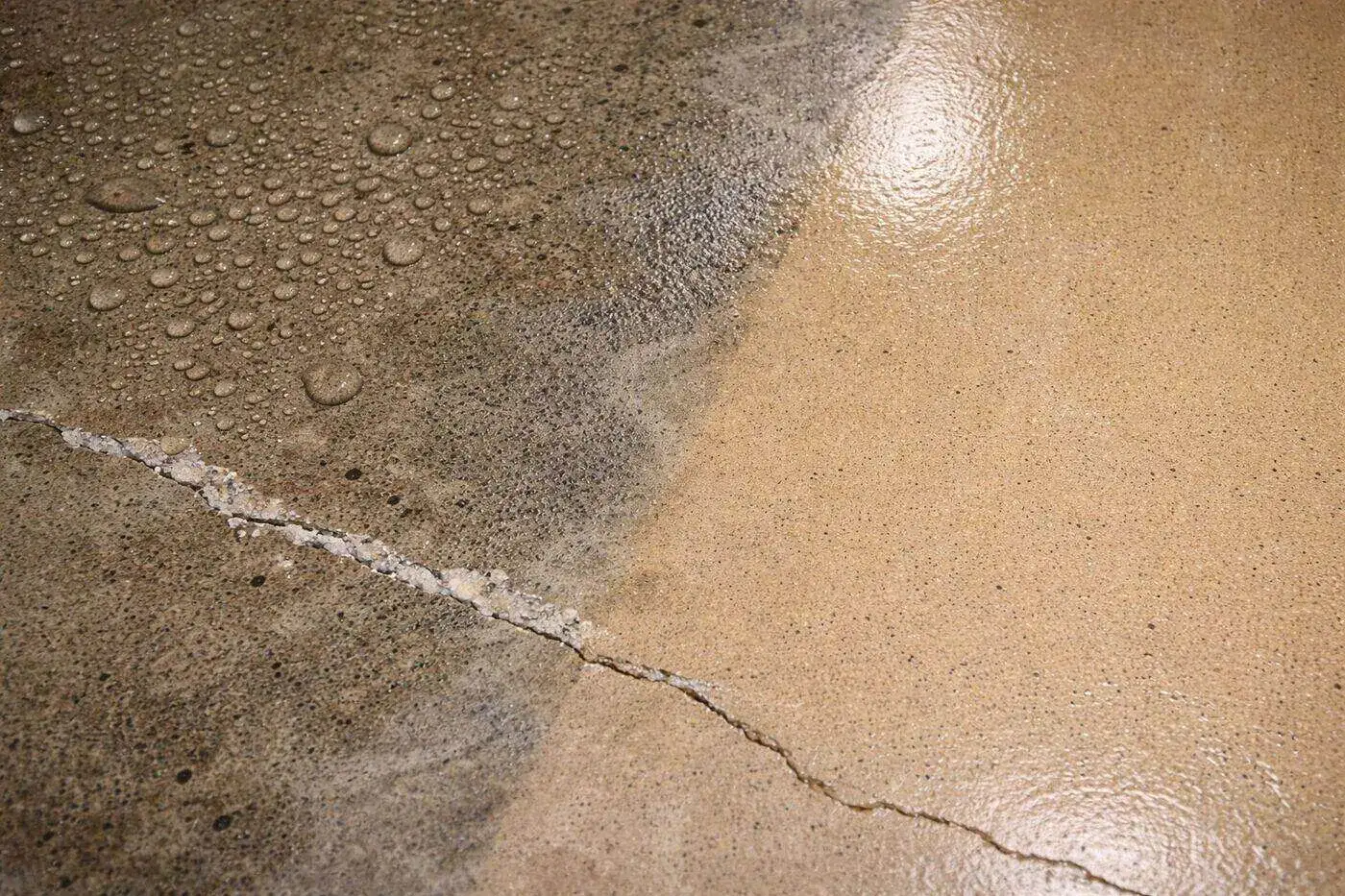
This is the number one killer of epoxy floors in South Florida, and it has nothing to do with how the floor looks on day one. Miami sits on a high water table, and many slabs push moisture vapor up through the concrete. If that vapor is not tested for and controlled, it builds up under the coating and lifts it from below, no matter how good the resin is. A floor can look perfect for a few months and then bubble and delaminate. The fix is a moisture test before the quote and a vapor-barrier primer where the numbers call for it.
UV Ambering on Sun-Exposed Floors
Standard epoxy that is not UV-stable yellows and chalks under Florida sun, fast on a garage floor with the bay door open or any interior that catches direct daylight. The floor does not fail structurally, but it discolors and loses its finish, which most owners count as the end of its useful life. A UV-stable polyaspartic or polyurethane topcoat prevents this and should be standard on any Miami floor that sees the sun.
Heat and Humidity Blushing Weak Coatings
Year-round heat keeps slab temperatures high, and Miami humidity routinely sits around the mid-70s. Slow-cure, consumer-grade epoxy can blush, cloud, or fail to cure properly in those conditions, leaving a soft or hazy surface that wears out early. Fast-cure polyaspartic and polyurea systems tolerate humidity and heat during cure, a big part of why professional Miami floors outlast kit floors.
Salt Air at the Coast
Properties near the water face salt-air exposure that attacks coatings at edges and open bays over time. On a closed residential garage it is a minor factor, but on waterfront homes, open-bay facilities, and pool decks it is real, and it pushes the spec toward thicker, more chemically resistant systems with UV-stable topcoats.
Poor Prep and No Diamond Grind
A coating is only as durable as its bond to the concrete, and that bond is created by mechanically profiling the slab with a diamond grinder. An acid wash, the shortcut used by most DIY kits and bargain crews, does not open the surface the way a grind does. Without a proper profile the coating bonds to a thin, weak surface layer and peels under stress, no matter how premium the resin is.
Abrasion and Hot-Tire Pickup
Day to day, the things that wear a floor are grit underfoot, dragged equipment, and hot tires. Hot-tire pickup, where warm tires soften and grab a weak coating as they cool, is a classic failure mode on thin or poorly cured floors. A full-build flake system with a hard polyaspartic topcoat shrugs this off, which is why the worn-out floors we replace are almost always thin single-coat jobs.
Want a Floor That Actually Lasts 20 Years?
It starts with a moisture test and the right system for your slab. Tell us about your space and we will give you an honest plan and a real number, free.
What Makes It Last Longer
The good news is that every shortcut above has a counter-move, and none are exotic. A floor built with these steps in Miami routinely reaches the top of its lifespan range. Here is what to insist on.
- Moisture testing and mitigation. The slab is tested before the quote, and where vapor transmission is high, a moisture-mitigation primer goes down first. This single step prevents the most common cause of premature failure in Florida.
- A diamond grind. The concrete is mechanically profiled, not acid-washed, so the coating bonds to solid concrete instead of a thin surface skin. This is the foundation of long-term adhesion.
- A full-thickness system. A real base coat, a decorative layer such as a flake broadcast, and a protective topcoat, not a single thin pour. Full build gives the floor a wear surface deep enough to absorb years of traffic.
- A UV-stable polyaspartic topcoat. The clear coat that resists yellowing, cures fast in humidity, and takes the daily abrasion so the color layer underneath never gets touched.
- Routine maintenance. Sweeping grit, rinsing salt, and wiping spills keeps the wear surface intact. A cleaned floor reaches its full lifespan; one buried under grit wears in the traffic lanes years early. Our Miami maintenance guide covers the routine in detail.
- Prompt recoat. When the topcoat starts to dull in the traffic lanes, a fresh topcoat resets the wear surface for a fraction of replacement cost and effectively restarts the clock.
Residential vs Commercial Lifespan
The biggest single variable in lifespan, after prep, is how hard the floor is used. A home garage and a warehouse can get the identical system and land years apart, simply because of the traffic each sees.
A residential floor, a garage, patio, or interior living space, sees foot traffic, the occasional car, and light loads. With a quality flake or quartz system and a UV-stable topcoat, that floor comfortably runs 15 to 20 years or more, and a single mid-life recoat can push it past two decades. Homeowners across Kendall, Coral Gables, and Pinecrest who keep their floors swept and recoated on time rarely think about replacement at all.
A commercial or industrial floor is a different story. Forklifts, pallet jacks, steel wheels, dropped tools, and aggressive cleaning chemicals all accelerate wear, so the realistic window between major refreshes is 5 to 10 years. The smart move is to recoat the topcoat on a schedule, before wear reaches the base layer, so the expensive part of the system never has to be redone. Done that way, the same base carries several topcoat cycles across decades.
Wear Signs: Recoat vs Replace
When a floor starts showing its age, the question is whether it needs a simple recoat or a full replacement, because the two are worlds apart in cost and disruption. Most of the time, a worn floor only needs a recoat.
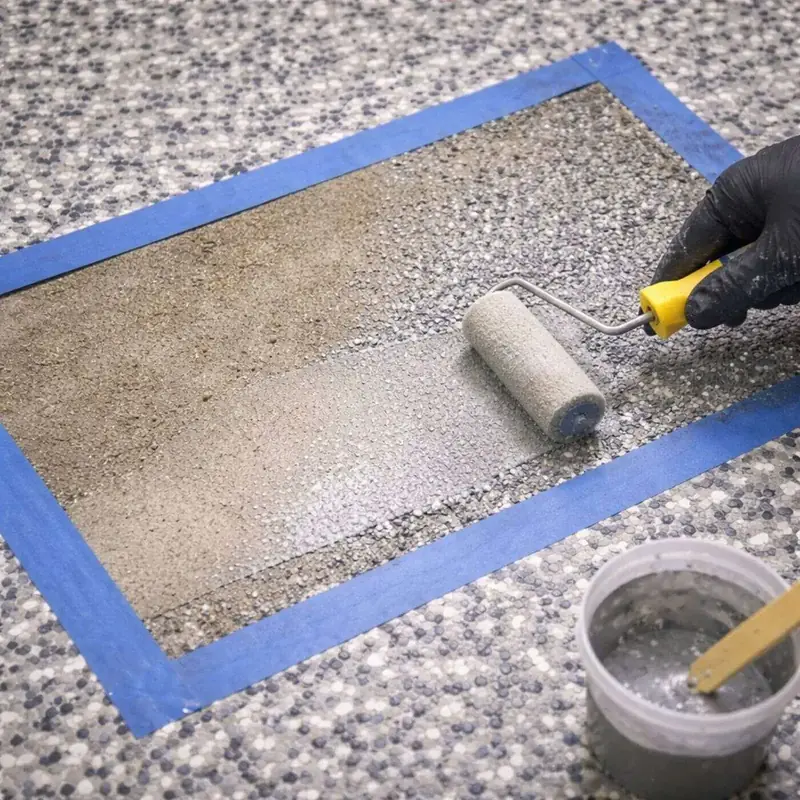
A recoat fixes wear that lives in the topcoat. If the base coat is still firmly bonded and the only problem is a dull, scuffed, or lightly worn surface in the traffic lanes, the floor is a recoat candidate. The crew scuff-sands the existing surface and applies a fresh topcoat, restoring the gloss and resetting the wear surface at a fraction of replacement cost. UV yellowing on an otherwise sound floor is also usually a recoat fix.
A replacement is only necessary when the bond has failed. If the coating is bubbling, flaking, or peeling off the concrete, if large sections have delaminated, or if moisture is actively pushing up from below, a recoat over the top will not hold. In those cases the failed coating has to be ground off and the floor rebuilt, this time with the moisture testing and prep that should have happened first. The good news is that true full replacements are usually the result of a bad original install, not normal aging, so a floor built correctly rarely needs one.
If you are not sure which camp your floor is in, an installer can tell with a quick adhesion check. And if budget is part of the decision, our Miami epoxy cost guide explains what sets the price of a Miami floor, and a free on-site estimate gives you the exact number for a recoat or a full system.
Frequently Asked Questions
How long does an epoxy floor last in Miami?
A professionally installed residential epoxy or polyaspartic floor in Miami typically lasts 10 to 20 years. Commercial floors under heavy traffic last about 5 to 10 years before a recoat. A cheap DIY kit poured over an untested slab can fail in 1 to 3 years. The single biggest factor is slab prep and moisture control, not the brand of resin.
Does Miami humidity shorten epoxy floor life?
Humidity itself does not destroy a properly installed floor, but the high water table behind that humidity does. South Florida slabs push moisture vapor up through the concrete, and if that vapor is not tested for and mitigated, it lifts the coating from underneath. With moisture testing and a vapor-barrier primer where needed, a Miami floor lasts just as long as one anywhere else.
Does epoxy fade or yellow in the Florida sun?
Standard epoxy that is not UV-stable will amber and chalk under Florida sun, especially on open-bay garage floors and sun-exposed interiors. A UV-stable polyaspartic or polyurethane topcoat resists yellowing and keeps the color true for many years. In Miami, a UV-stable topcoat should be standard, not an upgrade, on any floor that sees daylight.
How often should an epoxy floor be recoated?
On a residential floor with a quality topcoat, a refresh recoat every 7 to 12 years keeps it looking new and extends overall life well past 20 years. High-traffic commercial floors may need a topcoat refresh every 3 to 5 years. Recoating is far cheaper than replacing because it reuses the existing base, so doing it on time is the most cost-effective way to protect the floor.
Can a worn epoxy floor be resurfaced instead of replaced?
Often, yes. If the base coat is still bonded and the wear is limited to the topcoat, a light scuff-sand and a fresh topcoat restore the floor at a fraction of replacement cost. Full removal and replacement is only necessary when the coating is delaminating, the bond to the concrete has failed, or moisture is pushing through from below. An installer can tell which you need with a quick adhesion check.
Do DIY epoxy kits last as long as professional floors?
No. Big-box DIY kits use thin, water-based or low-solids resin, include no moisture testing, and rely on an acid wash instead of a diamond grind. In Miami's climate they commonly peel within 1 to 3 years. A professional floor uses high-solids resin, a ground profile, moisture mitigation where needed, and a UV-stable topcoat, which is why it lasts 10 to 20 years instead.
Get Your Free Miami Quote
How long your floor lasts comes down to decisions made before the first coat goes down: whether the slab was tested, whether it was ground, and whether the system was built for Miami. At Ascent Epoxy Miami, every project starts with a real look at your concrete, moisture testing, and an honest recommendation aimed at the longest realistic lifespan for your space and budget.
Ready to get a floor built to go the distance? Call us at (305) 889-7045 or request a free quote online. We serve Miami, Doral, Hialeah, Coral Gables, Kendall, Aventura, Pinecrest, Homestead, Miami Gardens, North Miami, and the surrounding communities across Miami-Dade County.
Related Articles
How to Clean & Maintain an Epoxy Floor in Miami
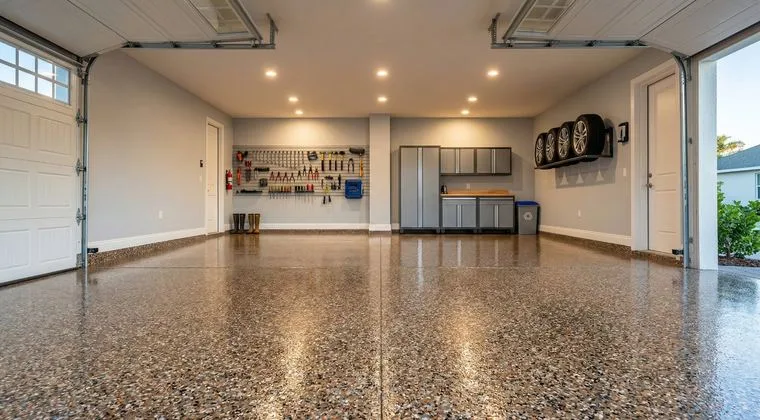
The simple routine that keeps a floor at its full lifespan in our climate.
How Much Does Epoxy Flooring Cost in Miami? (2026 Guide)
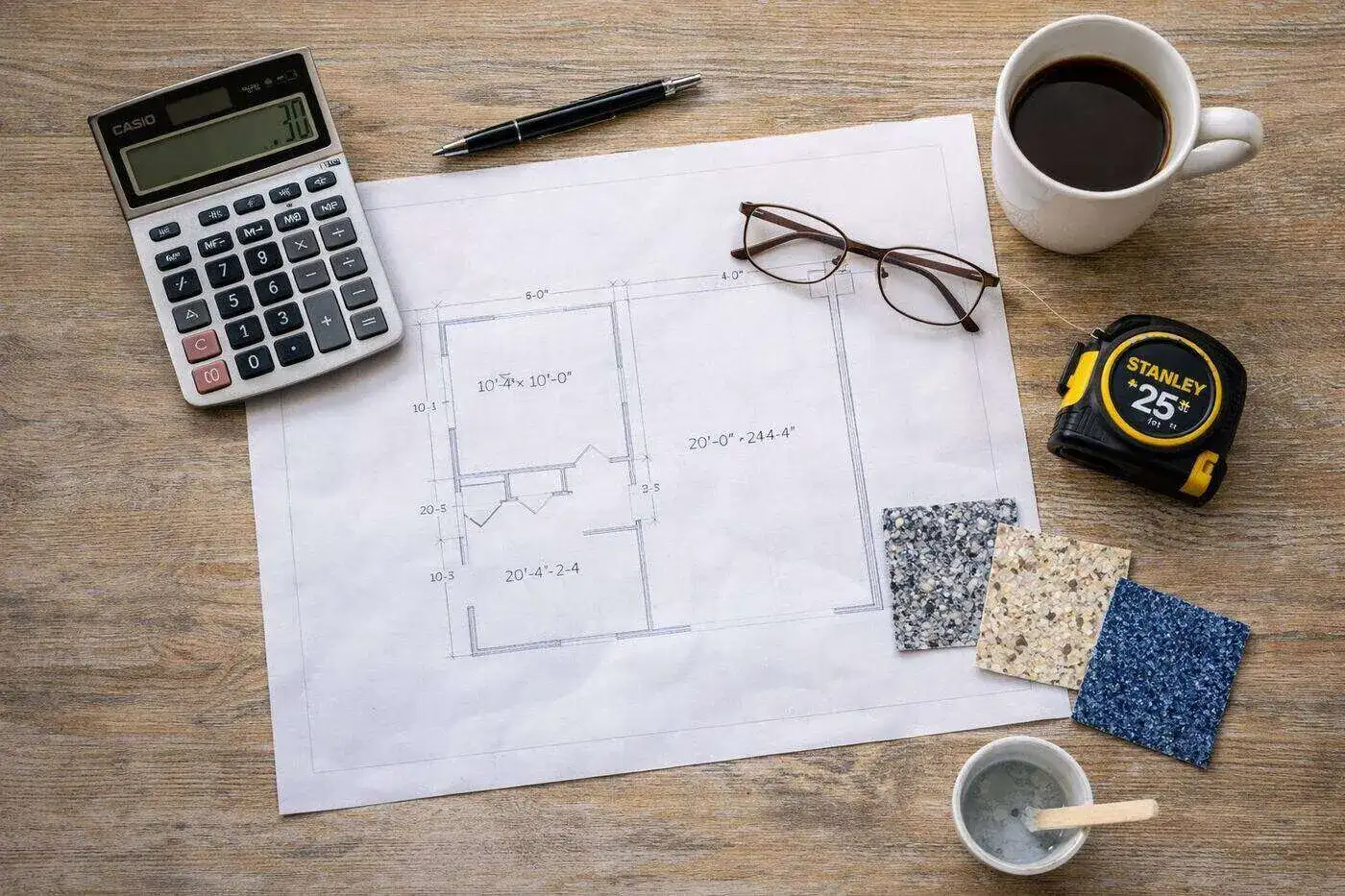
What sets the price of a Miami floor: size, slab condition, moisture and finish.
Why Epoxy Floors Fail in Miami — and the Moisture Test That Prevents It
The high water table, MVT testing, and what to ask a contractor before you sign.